 EN
EN

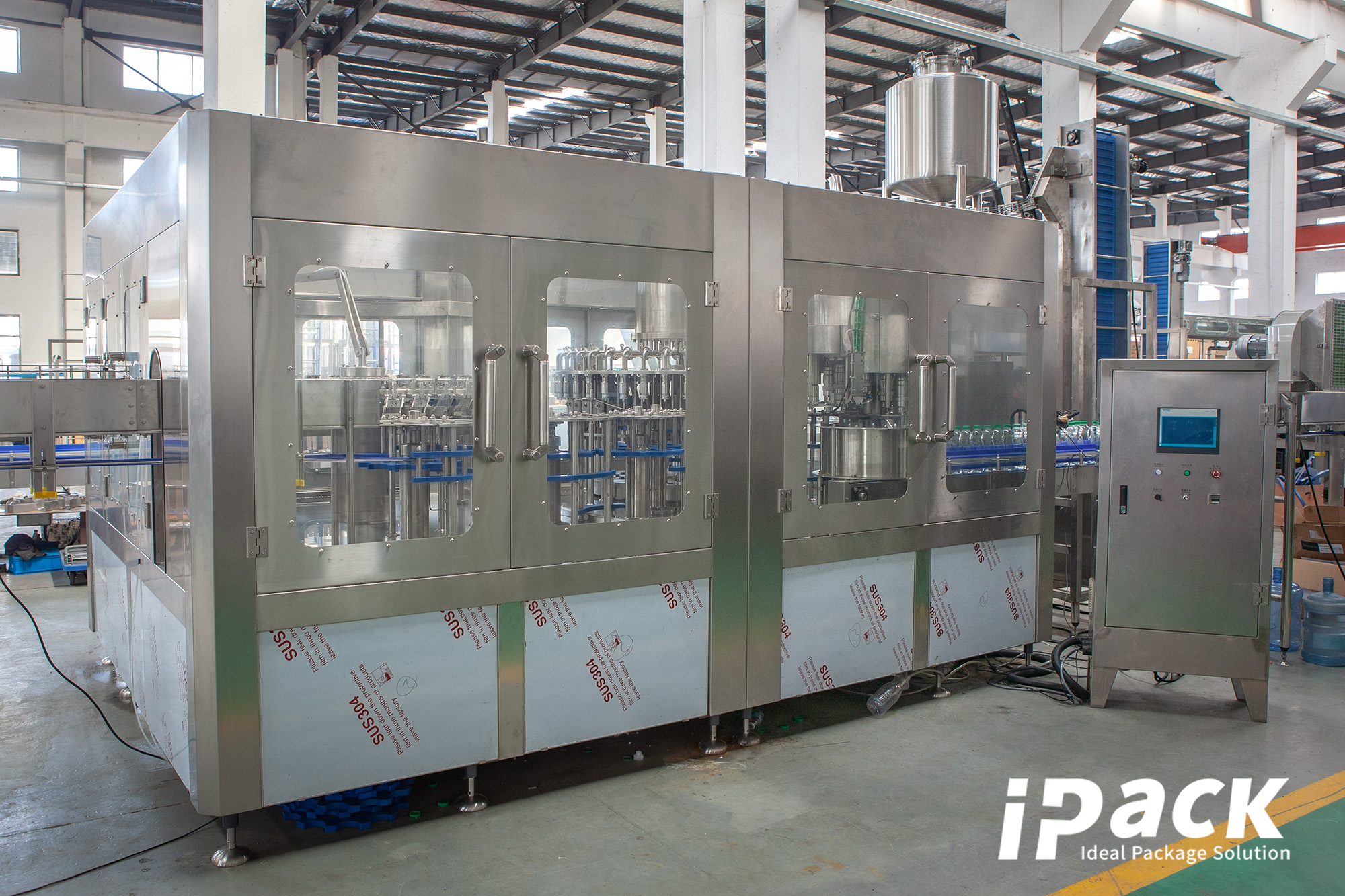
Smart Juice Filling Machine: Precision, Waste Reduction, and ROI
Walk into any modern beverage production facility, and you will see them running at high speed—juice filling machines transforming empty containers into finished products with remarkable consistency. But here is the reality that many production managers discover only after installation: not all filling machines deliver the same accuracy.
The difference between a machine that delivers ±0.25 mL precision and one that generates costly overfills and underfills is not just about the pump. It is about sensor technology, closed-loop control, intelligent compensation, and how well the machine adapts to changing formulations.
Here is what production engineers and facility managers need to know about modern juice filling machines—from precision filling and waste reduction to AI-driven flexibility and regulatory compliance.
Precision Filling: How ±0.25 mL Accuracy Is Achieved
Modern juice filling machines use Coriolis mass flow meters and servo-driven piston fillers to measure each dose in real time—detecting deviations as small as 0.1 mL. This data feeds a closed-loop controller that adjusts valve timing or piston stroke within milliseconds.
The technology stack:
-
Coriolis mass flow meters measure the actual mass of liquid, making them ideal for applications where density and temperature may vary. They are renowned for their unmatched accuracy and reliability.
-
Servo-driven valves provide precise speed and position control, improving filling head consistency and accuracy.
-
Optical level sensors in non-contact overflow fillers track the meniscus in clear containers and trim flow at the exact target height.
This dual-loop architecture maintains volumetric accuracy within ±0.25 mL—even at speeds exceeding 120 containers per minute.
The financial impact: Product giveaway drops significantly. Industry data shows automated systems reduce giveaway by 1.2%, saving mid-sized lines thousands annually. Equally important, underfilled packages—erosive to consumer trust—are virtually eliminated, reinforcing both revenue protection and brand reliability.
From the field: In a beverage plant I visited, the production team was struggling with inconsistent fill levels on a conventional volumetric filler. The reject rate from overfills and underfills was running at 2.3%. After upgrading to a Coriolis-based smart filling system with closed-loop control, the reject rate dropped to under 0.3%—and the line saved over $22,000 in product giveaway in the first year alone.
Intelligent Compensation: Handling Juice Variations Automatically
Juice formulations vary constantly. Pulp content shifts. Tanks warm after CIP cycles. Seasonal fruit differences alter viscosity and density.
Smart filling machines embed inline temperature probes and density meters that feed real-time attributes directly into the fill algorithm. When viscosity rises—as with high-pulp orange blends or mango nectar—servo drives automatically increase fill pressure or extend dwell time to maintain dose consistency.
The cost of getting it wrong:
-
Overfilling just 1–2 mL per bottle costs a typical mid-sized operation nearly $18,000 per year
-
Underfilling triggers retailer chargebacks and erodes brand trust
Built-in compensation eliminates both extremes, enabling one machine to handle everything from thin apple juice to thick nectar—without manual recalibration and without compromising the ±0.25 mL target.
Real-world application: Flow meters are particularly effective for high-pulp juices, where piston fillers can damage fruit particles. Electromagnetic flow meters are often the best choice for handling high-pulp juices, improving filling accuracy and preventing pulp damage.
Waste Reduction: Real-Time Monitoring and Auto-Correction
Modern juice filling machines transform waste reduction into an automated, data-driven process. Embedded sensors and real-time control logic replace manual sampling, catching inconsistencies before they become product loss.
Quantified gains:
-
High-speed checkweighers and flow meters monitor every container immediately after filling
-
When volume drifts outside the ±0.5% tolerance band, the closed-loop controller adjusts fill timing or piston stroke within milliseconds—no line stop required
-
Adaptive fill systems reduce underfilled units by 92% and cut total product loss by 40% compared to conventional volumetric fillers
-
Inline monitoring also prevents overfills, preserving juice and extending nozzle life
All metrics appear on real-time dashboards, making waste reduction visible, actionable, and quantifiable.
IoT-enabled leak detection and predictive maintenance:
-
IoT sensors monitor pressure decay across the product path and cap-seal integrity—flagging micro-leaks before they escalate
-
Fill-level analytics aggregate data across SKUs, revealing subtle trends like gradual valve wear or seasonal viscosity shifts
-
Predictive maintenance algorithms analyze vibration, temperature, and cycle-time data to identify component fatigue weeks in advance
-
The system schedules replacements during planned downtime, preventing catastrophic failures
From the field: A co-packing facility we reviewed had been experiencing sporadic underfill issues on a high-speed juice line. The root cause was gradual wear on the filling valves—too subtle for visual inspection but detectable through fill-level analytics. After implementing predictive maintenance alerts, the facility replaced the valves during scheduled downtime rather than waiting for a failure. Unplanned stoppages dropped by 75%, and annual product loss from underfills fell by over $30,000.
Multi-SKU Flexibility: AI-Driven Adaptation
Consumer demand for variety has forced beverage manufacturers to manage more SKUs with shorter runs. A modern juice filling machine must adapt quickly to different bottle shapes, pulp levels, and viscosities—without sacrificing speed or accuracy.
AI-driven software enables this flexibility:
-
Recognizes new container designs instantly and auto-adjusts fill parameters
-
Recalls stored recipes for each product and size, eliminating manual recalibration
-
Automated changeovers reduce downtime by up to 70%
Servo-driven height and diameter adjustments—paired with modular filling valves—allow switching from thin apple juice to pulpy orange blend in minutes. Real-time AI learning continuously compensates for temperature, density, and viscosity shifts per formulation, sustaining consistent fill volumes.
The business impact: This adaptability protects revenue by enabling producers to serve broader customer bases and seasonal products on a single line. Contract bottlers gain a clear differentiator: efficient, reliable execution across diverse client SKUs.
ROI Beyond Efficiency: Lower TCO, Faster Changeovers, and Enhanced Compliance
Smart juice filling machines reshape total cost of ownership by automating tasks that traditionally consume operator time.
| TCO Factor | Legacy Lines | Smart Juice Filling Line |
|---|---|---|
| Labor hrs/1M units | 22 | 14 |
| Calibration time/shift | 20 min | 5 min |
| Scrap-related downtime | 12 h/month | 3 h/month |
Key savings drivers:
-
Built-in self-calibration cuts setup to under five minutes—a 70% reduction versus conventional systems
-
Automated misfill rejection and instantaneous nozzle adjustment slash scrap rates
-
One production audit tracked a 35% drop in juice waste from overfills and bottle jams—translating to $18,000 annual savings per line from recovered product alone
Regulatory compliance:
Every fill event, sensor reading, and operator action is logged with tamper-evident, time-stamped electronic records—fully satisfying FDA 21 CFR Part 11 requirements for electronic signatures and closed-system controls. Audit-ready reports generate in seconds, cutting pre-inspection prep from days to hours. The same infrastructure supports current Good Manufacturing Practices (GMP) , ensuring hygienic sequences, glass-break detection logs, and validated CIP records are always complete.
Lessons from the Field
In a medium-sized juice producer we reviewed, the production team was running three older filling machines with manual calibration and no real-time monitoring. The overfill rate was running at 1.8%, and the underfill rate at 0.9%—combined, nearly 3% of product was being wasted.
The diagnosis: The machines lacked the ability to adjust for temperature and viscosity variations. Manual calibration was performed once per shift, but juice temperature and pulp content fluctuated continuously throughout the day.
The solution: The plant upgraded to a single smart filling machine with Coriolis flow meters, inline density measurement, IoT sensors, and AI-driven recipe management.
The result: The overfill rate dropped from 1.8% to under 0.2%. The underfill rate fell from 0.9% to under 0.1%. Annual product savings exceeded $45,000. The plant recouped the capital investment within 16 months.
Another example: a contract bottler with 15 different SKU configurations was spending over two hours per changeover on manual recalibration. After implementing AI-driven recipe recall and servo-driven adjustments, changeover time dropped to under 25 minutes. The facility increased its daily production runs by 40% without adding any new equipment.
These are not exceptional cases. They are the predictable outcome of treating filling as an integrated, data-driven process rather than an isolated production step.
FAQ
What is the accuracy level of modern juice filling machines?
Modern juice filling machines maintain volumetric accuracy within ±0.25 mL, even with output speeds exceeding 120 containers per minute.
How do these machines adjust for juice formulation variations?
Smart juice filling machines use inline temperature probes and density meters to compensate for changes in viscosity, temperature, and density automatically, ensuring consistent fill volumes.
What are the advantages of real-time monitoring?
Real-time monitoring allows embedded sensors to identify inconsistencies during filling and make auto-corrections instantly, reducing product loss and waste significantly.
How does AI-driven flexibility benefit multi-SKU production?
AI-driven software enables adaptation to various bottle shapes, formulations, and viscosities, reducing downtime by up to 70% and supporting quick changeovers for efficient multi-SKU production.
What compliance features do smart juice filling machines offer?
These machines support FDA 21 CFR Part 11 requirements and GMP standards through tamper-evident logs, audit-ready reports, and built-in regulatory adherence features.