 EN
EN

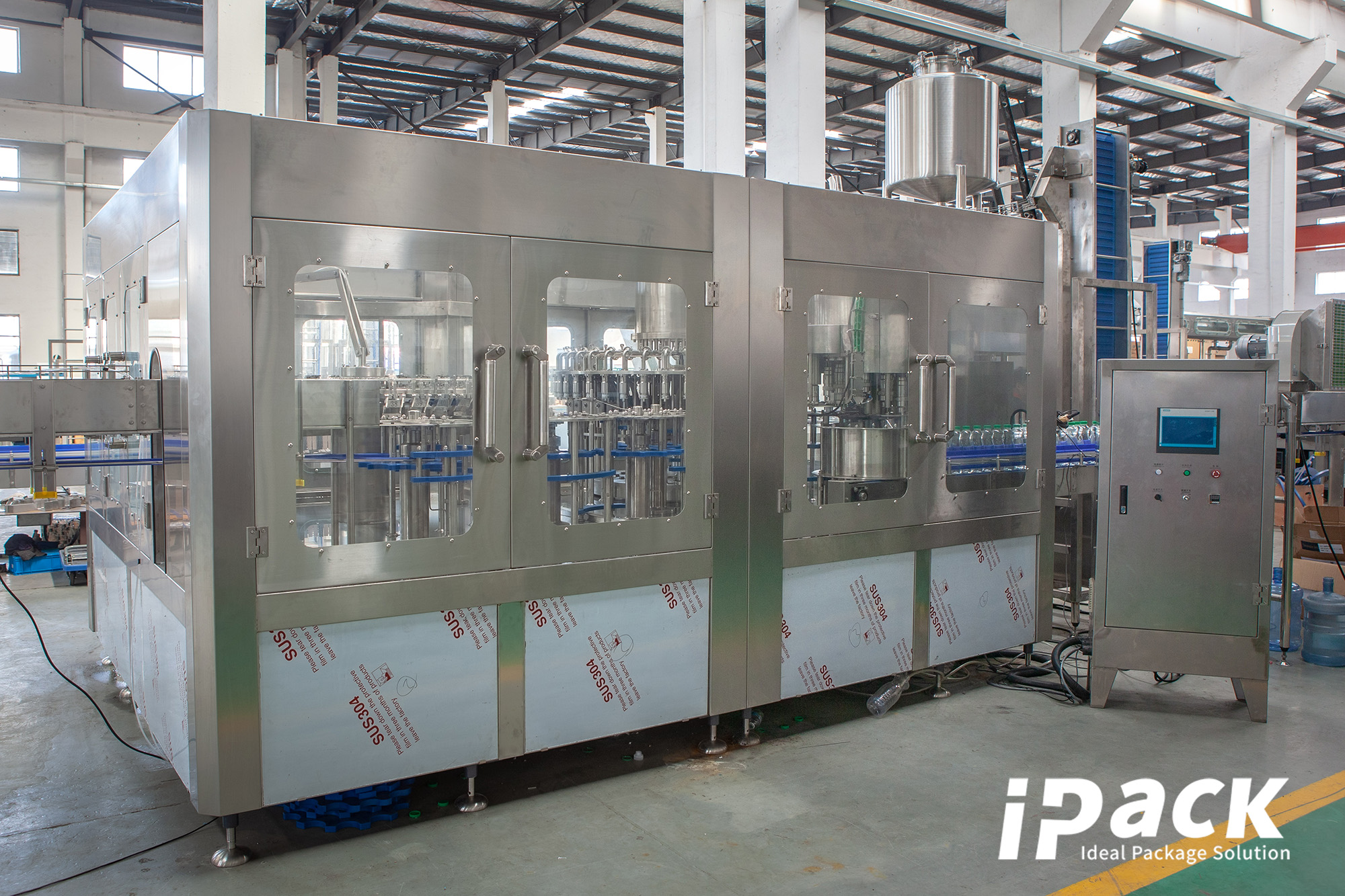
The 3‑AM Micro‑Stop – When an Old Filler Cost More Than Its Price Tag
A Midwestern juice plant had a 20‑year‑old volumetric filler that had been “running fine” for years. Then the demand for a new 16‑ounce SKU exposed its limitations. Fill nozzles clogged every 90 minutes, triggering micro‑stops that added 18 minutes of downtime per hour. The fill accuracy drifted from 97% to 94.5% over a shift, causing overfills that wasted $420 of product per day. The maintenance team spent 15 hours per week adjusting mechanical cams and clearing jammed nozzles. The plant was losing $153,000 annually in downtime, giveaway, and labor—all while running at just 72% of line capacity.
This scenario is more common than most production managers admit. Over the past five years, packaging consultants have observed that legacy juice filling machines consistently limit output, compromise quality, and hide costs that only become visible during a line audit. Understanding the case for upgrading isn't just about new equipment; it is about addressing the hidden bottlenecks that cap plant profitability.
The Legacy Bottleneck – How Outdated Fillers Limit Output and Quality
Many beverage plants still rely on legacy juice filling machines that struggle to keep pace with modern production demands. These older systems—often based on mechanical timing and manual adjustments—introduce variability that undermines both throughput and product consistency.
| Legacy Filler Issue | Consequence | Annual Cost Impact (Typical) |
|---|---|---|
| Frequent micro‑stops | Reduced throughput | $100,000+ in lost production |
| Fill accuracy drift (±2‑3%) | Product giveaway (3‑5%) | $50,000+ in wasted product |
| Long changeover time (45+ min) | Extended downtime | $30,000+ in lost capacity |
| Ineffective cleaning cycles | Food safety risk | Compliance and recall exposure |
| Limited data visibility | Hidden inefficiencies | Stalled continuous improvement |
Frequent micro‑stops occur when fill nozzles clog or misalign, forcing operators to clear jams manually. Fill accuracy drifts over time, leading to costly overfills or underfills that risk regulatory non‑compliance. A typical outdated machine may lose 3% to 5% of product volume to giveaway, eroding margins. Sanitation is equally problematic: residual juice in crevices and dead legs can harbor microbial growth, compromising shelf life and food safety. Sluggish changeovers between bottle sizes further limit flexibility. These combined inefficiencies often cap output at just 70–80% of line potential—creating a real bottleneck that prevents factories from meeting growing customer demand.
Servo‑Driven Filling – Precision, Repeatability, and Automated Correction
Servo‑driven juice filling machines replace mechanical cams and manual handwheels with closed‑loop electronic control—removing the need for operators to stop the line to adjust fill volumes. Each fill head operates via a dedicated servo motor, enabling real‑time correction of drift without human intervention.
| Performance Metric | Legacy Filler | Servo‑Driven Filler | Improvement |
|---|---|---|---|
| Fill accuracy | ±2‑3% | ±0.5% | 1.5‑2.5x more precise |
| Product giveaway | 3‑5% of output | <1% of output | 2‑4% product saved |
| Changeover time | 45+ minutes | <10 minutes | 70‑80% faster |
| Operator adjustment | Continuous | None (auto‑correct) | Manual intervention eliminated |
This architecture delivers ±0.5% fill accuracy across thousands of cycles, drastically cutting product giveaway. Plants report waste reductions of up to 2% of total output after retrofitting servo fillers—a savings exceeding $15,000 annually at a mid‑sized line. Digital recipe storage also transforms changeovers: what once took 45 minutes now completes in under ten. The result is consistent fill weights, reduced operator fatigue, and sustained quality compliance—even during extended, high‑speed runs.
Continuous Hot‑Fill Integration – Shelf Life and Throughput Gains
Continuous hot‑fill juice filling machines heat product inline and hold it at pasteurization temperature for only the precise few seconds required—then fill and immediately cool the sealed bottle. Unlike batch holding tanks, this minimizes thermal degradation, preserving delicate fruit flavors, color, and nutrients while still achieving a 12‑month ambient shelf life without preservatives.
| Process Characteristic | Batch Hot‑Fill | Continuous Hot‑Fill |
|---|---|---|
| Thermal exposure | Extended (holding tank) | Precise seconds (inline) |
| Flavor preservation | Moderate | Excellent |
| Throughput | Limited by tank cycle | 20‑30% higher |
| Equipment footprint | Separate pasteurizer | Integrated |
| Production speed | 120 bpm (typical) | 150+ bpm (typical) |
Because the process never pauses, throughput rises by 20–30% compared to batch systems waiting for tank emptying. A line previously capped at 120 bottles per minute can reach 150 bpm after adopting continuous hot‑fill. Simultaneously, shorter thermal exposure keeps taste profiles closer to fresh‑pressed quality—meeting both retailers' shelf‑life requirements and consumers' demand for clean‑label beverages. Integrating hot‑fill capability directly into the filling platform eliminates the separate pasteurizer step, streamlining production and delivering measurable gains in safety, longevity, and daily output.
Proven ROI – Case Evidence from Midwest Orchard Beverages
In 2024, Midwest Orchard Beverages replaced its aging six‑head volumetric filler with a hot‑fill integrated, servo‑driven juice filling machine. Before the upgrade, the line topped out at 110 bottles per minute with an average fill accuracy of 96.5%, causing chronic under‑fill rejections and margin‑diluting overfills.
| Metric | Before Upgrade | After Upgrade | Improvement |
|---|---|---|---|
| Line speed | 110 bottles/min | 143 bottles/min | +30% |
| Fill accuracy | 96.5% | 99.2% | +2.7 percentage points |
| Product giveaway | 3‑5% of output | <1% of output | 75% rework reduction |
| Annualized savings | — | $187,000 | ROI payback: 13 months |
After commissioning the new machine, line speed increased to 143 bottles per minute—a 30% rise—while fill accuracy rose to 99.2%. The 2.7‑percentage‑point gain eliminated nearly all giveaway waste and cut rework by 75%. Annualized savings from reduced product loss and lower labor deployment reached $187,000—pushing the payback on the $218,000 machine investment to just over 13 months. Critically, output increased without overtime, enabling faster response to seasonal demand peaks. This single upgrade strengthened plant economics and improved finished‑case consistency—a factor directly tied to retail shelf presence and consumer trust.
System Integration – The BXKM Perspective
Achieving the full benefits of a juice filling line upgrade requires more than selecting a new filler—it demands a systematic approach to line integration, auxiliary equipment, and downstream handling. BXKM's engineering expertise in auxiliary equipment for industrial processing supports the reliability of filling operations through thoughtful integration of material handling, conveying, and packaging line support systems. By understanding the interdependencies between filling equipment and the auxiliary machinery that supports it—such as unscramblers, cap feeders, and case packers—BXKM helps beverage producers achieve consistent output and reduce unplanned downtime. This comprehensive support, combined with a responsive supply chain, ensures that both primary and auxiliary equipment remain productive and reliable.
FAQ
| Question | Answer |
|---|---|
| What are the main issues with outdated juice filling machines? | Frequent micro‑stops, fill accuracy drift (3‑5% giveaway), slow changeovers, and poor sanitation—limiting output to 70‑80% of line potential. |
| What benefits do servo‑driven juice filling machines offer? | ±0.5% fill accuracy, real‑time automated correction, faster changeovers (<10 min), and elimination of manual adjustment—cutting product waste by 2‑4%. |
| How does continuous hot‑fill technology improve production? | Short thermal exposure preserves flavor and nutrients, increases throughput by 20‑30%, and eliminates separate pasteurizer steps. |
| What is the ROI of upgrading to a modern juice filling machine? | Industry benchmarks show 12‑30 month payback. In the Midwest Orchard case, a $218,000 investment paid back in just over 13 months via $187,000 annual savings. |
| How did Midwest Orchard Beverages benefit from upgrading? | Line speed rose 30% (110 to 143 bpm), fill accuracy reached 99.2%, annual savings of $187,000, payback under 14 months. |
| What is the impact of fill accuracy on profitability? | Every 1% improvement in fill accuracy reduces product giveaway proportionally. For a mid‑sized line, 2‑3% accuracy gain can save over $50,000 annually. |