 EN
EN

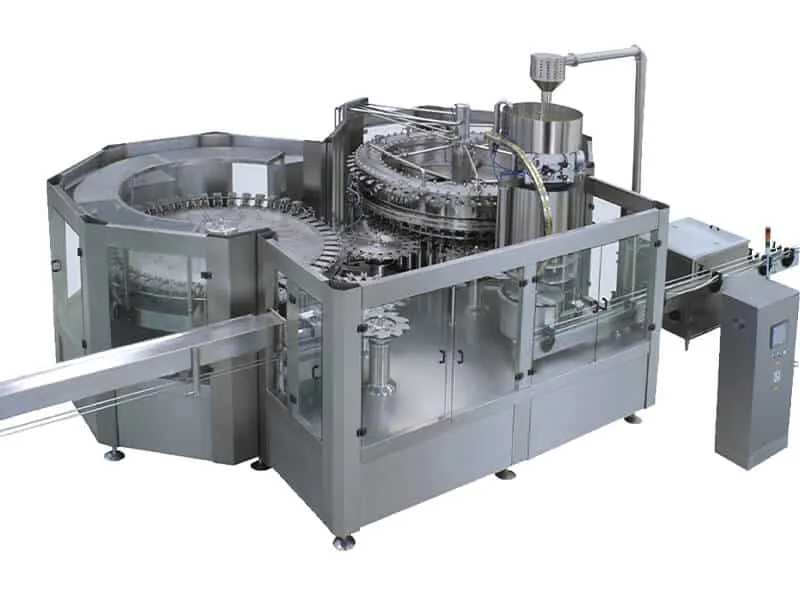
Carbonated Drink Filling Machine: Precision Counter-Pressure Filling as the Foundation of CO2 Retention
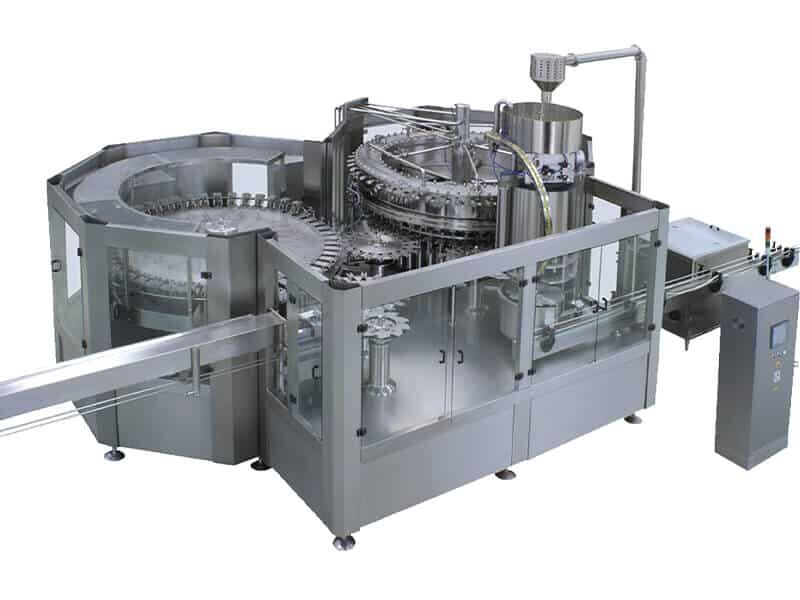
Physics of CO2 Solubility and Why Real-Time Pressure Matching Is Non-Negotiable
According to Henry's Law, the amount of CO2 that dissolves in a liquid depends on the pressure of CO2 above it. When filling beverages, if there's a difference in pressure between what's inside the bottle and the space above the liquid, we get problems right away like foaming over, losing CO2, and uneven carbonation throughout the product. To fix this issue, modern soda filling equipment works on what's called isobaric principles basically keeping everything at equal pressure. Before pouring the drink into bottles, manufacturers pressurize them first with CO2 so they match the level already dissolved in the beverage around 2.5 to 3.5 bars typically. This method stops about 9 out of 10 cases of CO2 escaping during filling according to data from Packaging Trends 2023. If companies skip this step and don't maintain proper pressure balance while filling, their products end up with roughly 34% less carbonation than ideal systems produce, which affects how fresh the drink tastes, its texture when consumed, and how long it stays stable on store shelves.
How Servo-Controlled Valves Eliminate Post-Fill Degassing in Modern Carbonated Drink Filling Machines
Mechanical valves often lag during high-speed operation (>600 bpm), allowing transient pressure spikes that trigger delayed degassing. Advanced systems use servo-controlled valves governed by PID (Proportional-Integral-Derivative) controllers, adjusting gas and liquid flow every 0.1 seconds. This enables:
- Headspace pressure control within ±0.05 bar
- 40% reduction in foam formation via laminar, low-turbulence flow
- Batch-to-batch dissolved CO2 consistency within 0.15 g/L variance
By stabilizing pressure through bottle sealing, these valves preserve carbonation integrity from fill to consumer consumption—eliminating post-fill degassing as a source of variability.
Oxidation Prevention and Foam Stability Through Integrated Design
Sealed Pre-Fill Purging, Sterile Nitrogen Blanketing, and Low-Shear Nozzle Geometry
The oxidation process actually starts even before the liquid makes it into the bottle itself. Manufacturers tackle this issue with sealed pre-fill purging techniques that get rid of ambient air and cut down on initial oxygen contact. They typically do this through vacuum methods or by displacing air with inert gases. Once filling begins, sterile nitrogen is used to maintain an oxygen-free environment all the way through the process. The nitrogen creates a protective layer between the beverage surface and where the container will eventually close. What's really important here is the design of the nozzles. Low shear geometry helps reduce turbulence during filling. These specially shaped, tapered nozzles allow liquid to flow smoothly into containers without causing unnecessary agitation that can mess with micro bubbles and lead to early carbonation issues. Real world testing across the industry has shown these integrated systems regularly bring dissolved oxygen levels down below 0.1 ppm. This achievement extends product shelf life by around 30% and keeps head retention and effervescence consistent throughout production runs.
Proven Performance: Quantifiable Impact on Shelf Life and Product Integrity
Dissolved CO2 Consistency (mg/L) Across High-Speed Operation: Data from a 12,000 BPH Line
These advanced carbonated beverage fillers can handle around 12,000 bottles each hour while keeping the dissolved CO2 levels pretty much the same throughout, typically within about 5 mg/L give or take. What makes this possible? Real time pressure sensors working together with those fancy servo valves that adjust on the fly. The result? Drinks stay properly fizzy, flavors don't get messed up when there's not enough carbonation, and customers stop complaining about flat soda. Even better, the whole system knows how to adapt when things change, whether it's the thickness of the liquid or fluctuations in production speed. This means consistent carbonation quality stays intact even when running at maximum capacity for long periods.
Correlation Between Cap Seal Integrity, Oxygen Transmission Rate (OTR), and Extended Shelf Life (+42 Days)
The integrity of cap seals really determines how long products stay fresh because it controls how much oxygen gets inside. Top quality capping equipment can get oxygen transmission rates down to under 0.0005 cc per package per day, which basically stops oxygen from seeping through. Testing has shown these better seals actually keep products fresh for about 42 extra days compared to what's standard in the industry. To reach this level of protection, manufacturers need to focus on three main things working together. First, applying consistent torque so there are no tiny leaks. Second, using those special multi-layer liners that stop gases from passing through. And third, getting nitrogen into the container right after filling. When all these factors line up properly, they fight off the kind of spoilage caused by oxidation and help maintain carbon dioxide levels too. This means good sealing isn't just part of packaging anymore, it's become essential for keeping carbonated drinks tasting right over time.
Smart Evolution: AI-Driven Monitoring and Predictive Optimization in Carbonated Drink Filling Machines
Modern carbonated drink filling machines integrate AI to unify precision, reliability, and adaptability. Machine learning models process live sensor data—including pressure, fill volume, temperature, and CO2 solubility—to adjust parameters mid-cycle. This ensures target carbonation is held within ±2% variance and prevents over-carbonation or under-filling, even amid process drift.
Smart maintenance systems can spot early signs of wear on valves, seals and actuators as much as three days before they actually fail, which cuts down unexpected stoppages by almost half according to research from Packaging Technology & Science in 2023. The quality control systems powered by artificial intelligence keep a close eye on dissolved oxygen levels throughout production lines. When oxygen gets above 0.5 parts per million, the machines automatically flush out contaminated sections. These advanced platforms work their magic by adjusting conveyor speeds, aligning filler nozzles, and setting proper capping torque all at once while things are running. As a result, factories see about a 15 percent boost in how much product moves through without compromising either the containers themselves or the carbonation that makes beverages taste right.
FAQ
What is the importance of pressure matching in carbonated drink filling?
Pressure matching is critical in filling carbonated drinks because it prevents issues like foaming, CO2 loss, and uneven carbonation.
How do servo-controlled valves help in maintaining carbonation?
Servo-controlled valves adjust gas and liquid flow dynamically, stabilizing pressure and preserving carbonation integrity throughout the filling process.
Why is AI integration significant in modern filling machines?
AI helps in adapting to changes quickly, ensuring consistent carbonation, reducing stoppages, and maintaining overall production efficiency.
Table of Contents
- Carbonated Drink Filling Machine: Precision Counter-Pressure Filling as the Foundation of CO2 Retention
- Oxidation Prevention and Foam Stability Through Integrated Design
- Proven Performance: Quantifiable Impact on Shelf Life and Product Integrity
- Smart Evolution: AI-Driven Monitoring and Predictive Optimization in Carbonated Drink Filling Machines
- FAQ