 EN
EN

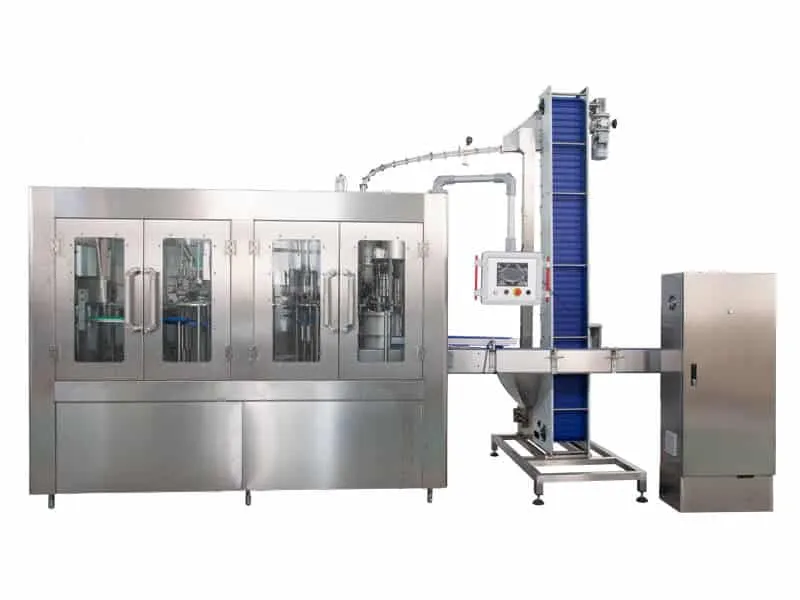
Smart Automation and IoT Integration in PET Bottle Blowing Machines
Real-Time Monitoring and Predictive Maintenance via IoT Sensors
Modern PET bottle blowing machines embed a network of IoT sensors that continuously monitor critical parameters—including temperature, pressure, cycle time, and motor load—and transmit data to a central dashboard. This real-time visibility enables operators to detect anomalies early: for instance, a gradual rise in heater temperature triggers an alert before component failure occurs. Predictive maintenance algorithms analyze historical sensor data to schedule interventions only when needed, reducing unplanned downtime by up to 30% and improving overall equipment effectiveness (OEE) without increasing manual inspection overhead.
AI-Driven Process Optimization for Consistent Wall Thickness and Dimensional Accuracy
AI enhances precision beyond static setpoints. Machine learning models trained on thousands of production cycles dynamically adjust blow pressure, heating profiles, and stretch rod timing in response to real-time variables—such as resin viscosity shifts or ambient temperature fluctuations. This ensures consistent wall thickness and dimensional accuracy across every bottle. The result is significantly lower material waste from rejections and reliably uniform mechanical strength—even in ultra-lightweight designs where gram-level savings are critical to sustainability and cost goals.
Digital Twins and Cloud-Based Fleet Management for End-to-End Control
A digital twin—a live, virtual replica of the physical machine—allows engineers to simulate production changes, stress-test configurations, and diagnose issues offline. When integrated with cloud-based fleet management, this capability scales across geographically dispersed facilities: a single platform can monitor and manage dozens of machines globally. Updates applied to one digital twin can be deployed uniformly across all connected units, ensuring standardized performance and compliance. Remote diagnostics also enable rapid resolution of software-related faults, minimizing travel time and service delays—enhancing agility and operational resilience across the entire bottling network.
Energy Efficiency and Sustainable Operation of PET Bottle Blowing Machines
Modern PET bottle blowing machines are engineered not only for speed and precision but also for measurable environmental and economic impact—reducing energy use, enabling recycled content, and cutting material waste.
High-Efficiency Heating and Cooling Systems Cut Energy Use by Up to 25%
Intelligent heating systems precisely regulate zone-specific temperatures to eliminate thermal overshoot and idle energy loss. Complementing these are advanced cooling mechanisms that stabilize bottles faster using optimized airflow and heat-exchange geometry. Key enablers include variable-frequency drives (VFDs) that match motor output to actual demand, infrared heating elements targeting preform necks and bodies selectively, and heat recovery systems that recapture and reuse thermal energy from exhaust streams. Industry reports confirm 20–25% average energy reductions versus conventional machines; top-tier all-electric models achieve up to 50% savings through full thermal optimization and elimination of pneumatic losses.
RPET Compatibility and Material-Saving Mold Design Support Circular Economy Goals
Today’s machines process post-consumer recycled PET (rPET) at commercial scale without sacrificing output quality or cycle time. Specialized screw geometries, enhanced filtration, and adaptive thermal profiles preserve melt integrity and minimize degradation during high-rPET runs. Concurrently, mold innovations—such as precision weight control, thin-wall structural modeling, and high-accuracy neck finishing—enable bottle lightweighting of up to 15% while maintaining pressure resistance and top-load strength. These capabilities directly support circular economy objectives: higher rPET incorporation rates, reduced virgin plastic dependence, and lower transportation emissions from lighter containers.
| Sustainability Feature | Environmental Benefit | Economic Advantage |
|---|---|---|
| RPET Compatibility | Reduces virgin plastic consumption | Lowers material costs |
| Lightweighting | Decreases transportation emissions | Saves on resin expenses |
| Energy Recovery | Lowers carbon footprint | Cuts utility bills |
Precision, Speed, and Quality Advancements in PET Bottle Blowing Machine Performance
Servo-driven motion control delivers sub-millimeter repeatability—maintaining wall thickness within ±0.02 mm tolerances across entire production runs. This level of precision eliminates structural inconsistencies that lead to leakage, deformation, or carbonation loss—particularly vital for carbonated beverages. At speeds exceeding 2,400 bottles per hour per cavity, such accuracy is sustained through real-time pressure feedback loops and automatic compensation for mechanical drift. Integrated high-resolution vision inspection systems scan each bottle for surface defects, micro-fractures, and dimensional deviations, rejecting nonconforming units with >99.9% reliability—cutting defect rates below 0.1%, per industry benchmarks.
| Performance Metric | Traditional Machines | Advanced Machines | Improvement |
|---|---|---|---|
| Production Speed | 1,200 bottles/hour | 2,400+ bottles/hour | >100% faster |
| Wall Thickness Tolerance | ±0.05 mm | ±0.02 mm | 60% tighter |
| Material Waste Rate | 3–5% | <0.8% | 70% reduction |
AI-driven process optimization further refines heating profiles and stretch ratios in real time, ensuring optimal material distribution and minimizing localized stress points—critical for both performance and recyclability.
Scalability and Operational Flexibility for Beverage Brands and Contract Packagers
Rapid market shifts—seasonal SKUs, regional variants, and private-label expansions—demand production lines that scale seamlessly. Modern PET bottle blowing machines meet this need through modular architecture and intelligent changeover systems.
Quick-Change Mold Systems and Modular Configurations for SKU Diversification
Quick-change mold systems reduce tooling swap time to under 15 minutes—cutting changeover duration by up to 80% versus legacy setups. Paired with modular heating and blowing stations, lines can be reconfigured on-the-fly: cavity count, stroke length, and output speed adjust to match batch sizes ranging from 5,000 to 500,000 bottles. For contract packagers serving multiple brands, this means running diverse SKUs on a single line without compromising throughput or quality—dramatically lowering setup labor, scrap, and scheduling complexity.
Seamless Integration with Filling and Labeling Lines for End-of-Line Efficiency
Synchronized integration with downstream filling, capping, and labeling equipment is achieved through shared PLC protocols and unified conveyor controls. Real-time output data from the blower informs filler speed adjustments—enabling dynamic line balancing without accumulation tables or buffer zones. This tight coordination reduces container handling, minimizes damage risk, and boosts end-of-line efficiency by 15–20%. The result is a truly coordinated packaging line—not just a collection of standalone machines—delivering responsiveness, reliability, and ROI across the full value chain.
FAQ Section
What are IoT sensors in PET bottle blowing machines?
IoT sensors monitor critical parameters like temperature, pressure, and cycle time in real-time, enabling efficient anomaly detection and predictive maintenance to reduce downtime.
How does AI improve the performance of PET bottle blowing machines?
AI applies machine learning to dynamically adjust critical parameters such as blow pressure and heating profiles, ensuring consistent wall thickness and reducing material waste.
What is a digital twin in this context?
A digital twin is a virtual representation of a physical machine, allowing engineers to simulate scenarios, diagnose issues offline, and standardize performance across facilities.
How do these machines contribute to sustainability?
They reduce energy consumption, enable the use of recycled PET materials (rPET), and optimize mold designs to minimize material waste and transportation emissions.
What is the significance of quick-change mold systems?
Quick-change mold systems enable rapid reconfiguration for diverse SKUs, reducing operational downtime and catering to market demands effectively.
Table of Contents
- Smart Automation and IoT Integration in PET Bottle Blowing Machines
- Energy Efficiency and Sustainable Operation of PET Bottle Blowing Machines
- Precision, Speed, and Quality Advancements in PET Bottle Blowing Machine Performance
- Scalability and Operational Flexibility for Beverage Brands and Contract Packagers
- FAQ Section