 EN
EN

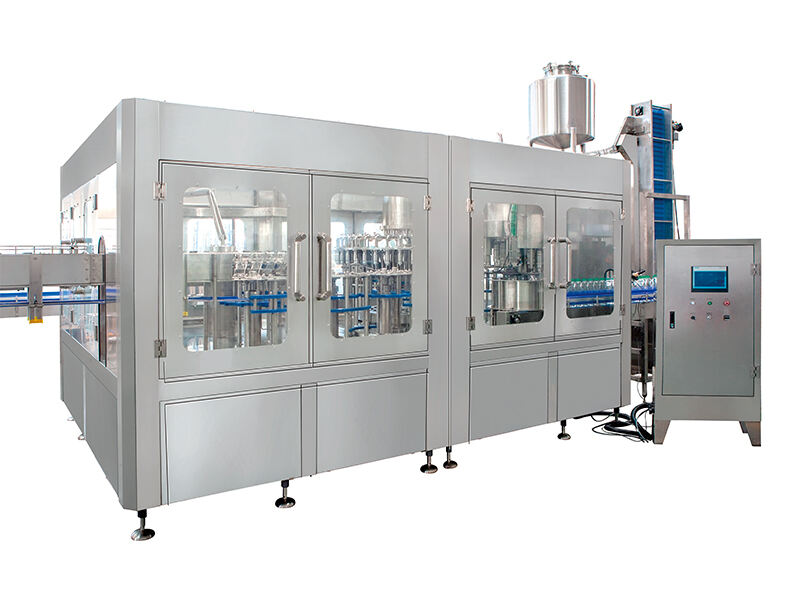
Increased Productivity and High-Speed Production Efficiency
The latest beverage filling equipment can produce about 40 percent more than older semi-automated models, reaching impressive speeds of around 1,200 containers per minute. What makes these machines so effective is how they cut out those frustrating manual delays. They feature synchronized conveyor belts, automatic cap handling, and precision filling mechanisms that stay within half a percent accuracy even when running flat out. Looking at industry data from last year, most beverage producers saw their cycle times drop by nearly 30% once they switched to full automation. One particular juice company stands out though they managed to fill almost 1.8 million bottles each shift thanks to their investment in continuous feed technology.
Manufacturers across the board are seeing roughly a 22% increase in production output once they install real time monitoring systems that use predictive algorithms to tweak fill rates according to what the packaging lines can handle downstream. These systems keep things running smoothly most of the time, achieving around 96% uptime even during peak periods when carbonated beverages and ready to drink teas are flying off shelves. Beverage producers have been moving their operations toward full automation lately, which allows them to run seven days a week with just one day off while cutting energy expenses by about 10% per product unit compared to older equipment setups. This makes it much easier to scale up production when there's a sudden surge in demand during holiday seasons or special events without breaking the bank on extra resources.
Consistent Fill Accuracy and Superior Product Quality Control
Precision filling technology ensures uniform fill volumes with <2% variation
Today's beverage filling equipment relies on servo pumps and flow meters to keep fill levels pretty consistent throughout production batches, typically staying within about 1.5% variation according to what we see in the field. These machines come equipped with smart software that constantly adjusts for changes in product temperature, which makes all the difference when dealing with tricky liquids like syrups or thick sauces. Pair these filling systems with modern inspection tech and manufacturers can sidestep those pesky underfill issues that get them in trouble with regulators, plus avoid losing money through unnecessary overfills. The combination works wonders in plants where consistency matters most, though getting everything calibrated right takes some trial and error on the factory floor.
Reduced product waste and improved quality consistency across batches
Beverage filling systems that are automated can cut down on material waste somewhere around 18 to maybe even 30 percent when compared to what happens with manual methods. The reason? Less spillage occurs and there's not so much need for redoing things. These machines actually use infrared sensors along with load cell tech to spot flaws in containers right before they get filled, which means only good quality bottles make it into the production line. What we're talking about here is basically a quality control loop that keeps drinks safe and consistent all the way from when ingredients first come in until they end up properly packaged. For companies aiming at getting or maintaining their ISO 22000 certification status, this kind of system becomes pretty much essential these days.
Comparison: Manual vs. automated filling accuracy in large-scale bottling
Looking at juice bottling operations in 2023 showed something pretty clear: when people fill bottles by hand, there's usually around 5 to 8 percent variation in how much liquid goes in each container. But those fancy automated filling machines? They stay within less than 2 percent most of the time. Workers just can't keep up with all day long repetition without making mistakes from tired hands and eyes. Meanwhile, those computer controlled systems called PLCs just keep going and going, hitting the same measurement every single time for tens of thousands of bottles per day. The difference really adds up when companies are running massive production lines. Take away just 1 percent waste and that means saving almost 740 thousand dollars a year according to some industry research from last year.
Significant Cost Savings Through Labor Reduction and Operational Efficiency
Lower Labor Costs and Reduced Reliance on Manual Operators
Beverage filling machines these days can slash labor expenses by around half when compared to doing things manually, as industry reports suggest. When companies automate their processes, they no longer need workers for those tedious jobs such as lining up bottles or making sure caps are properly tightened. Instead, factory managers can move their employees into better positions focused on checking product quality or overseeing technical aspects of production. Take a local juice company for instance they went from needing 12 people on their bottling line down to just three once they brought in automation tech. And guess what? They still managed to keep running nonstop throughout the day and night. We're seeing this same kind of shift across the food manufacturing sector too, where packaging lines are getting smarter and requiring fewer hands on deck overall.
Long-Term ROI of Automated Beverage Filling Systems
While initial investments average $120k–$250k, beverage filling machines typically deliver payback within 18–30 months through multiple cost-saving channels:
- Labor Efficiency: 40% productivity gains (McKinsey 2023)
- Energy Optimization: Smart sensors reduce power consumption by 22%
- Maintenance Costs: Predictive diagnostics cut repair expenses by 35%
A 2024 manufacturing study found facilities using automated beverage filling solutions achieved 19% higher profit margins than manual-operation counterparts over five-year periods.
Reduced Material Waste and Spillage Lowers Operational Expenses
Precision filling nozzles in modern beverage machines maintain fill accuracy within ±1.5ml, reducing product giveaway by 18% annually. Advanced spill-containment systems with automated shutdown triggers decrease raw material losses by up to 27% compared to manual lines – critical for high-value ingredients like cold-pressed juices or specialty syrups.
Scalability and Seamless Integration for Business Growth
Modern beverage filling machines feature modular designs that enable production scaling from 2,000 to 10,000 bottles/hour without costly infrastructure upgrades. This flexibility supports seasonal demand spikes and long-term capacity expansion – critical for brands targeting 15–20% annual growth.
Integration of Automated Beverage Filling Machines Into Existing Food and Beverage Lines
Advanced interfacing protocols allow automated filling systems to connect with legacy packaging, labeling, and quality control equipment. A 2023 Food Manufacturing Technology Report found 92% of plants using modular beverage filling machines successfully integrated them with legacy systems while maintaining <2% production variance.
Support for Fluctuating Demand and Future Production Expansion
Cloud-enabled models permit real-time throughput adjustments, with load-balancing algorithms redistricting tasks across modules during peak periods. This adaptability reduces idle time by 33% compared to fixed-capacity systems, according to bottling efficiency benchmarks from Beverage Industry Insights (2024).
Enhanced Reliability, Uptime, and Future-Proofing with Smart Automation
Today's beverage filling equipment uses predictive maintenance software that can spot potential breakdowns before they actually happen during production runs. The machines have sensors all over them checking things like how the motors vibrate, whether seals are holding up, and if valves are working properly. When these readings go beyond what's considered normal, the system sends out maintenance warnings. Companies adopting this kind of forward thinking maintenance strategy see about a 40-45% drop in unexpected shutdowns versus old fashioned repair methods after something breaks down. A recent look at smart factory practices from late 2023 showed just how effective these systems have become across different industries.
Industry 4.0 Integration: IoT and Data-Driven Optimization in Filling Systems
Cloud-connected filling machines generate 12–15% more operational data per hour than standalone units, enabling plant managers to:
- Identify throughput bottlenecks using historical trend analysis
- Optimize CIP (Clean-In-Place) cycles based on actual residue levels
- Synchronize filler speeds with upstream/downstream equipment through digital twin simulations
A 2024 study of IoT-driven optimization strategies found a direct correlation between data utilization rates and overall equipment effectiveness (OEE), with top-performing bottling lines achieving 92% OEE through:
| Metric | Traditional Systems | Smart Automation | Improvement |
|---|---|---|---|
| Annual Downtime | 14% | 6% | -57% |
| Changeover Duration | 45 minutes | 18 minutes | -60% |
| Energy Consumption | 2.8 kWh/1k bottles | 1.9 kWh/1k bottles | -32% |
Strategic Roadmap for Upgrading Legacy Lines to Modern Beverage Filling Machines
Progressive manufacturers implement automation upgrades through three phases:
- System Audit – Map existing line capabilities against current/future production targets
- Pilot Testing – Validate new filling technologies on a single SKU before full deployment
- Phased Integration – Retrofitting 1–2 machines per quarter to maintain baseline output
This approach minimizes capital risk while achieving 18–24 month ROI windows, with most facilities recovering automation costs through 35–40% reductions in mechanical wear and product waste.
FAQ
What are the benefits of using automated beverage filling machines?
Automated beverage filling machines offer increased productivity, improved fill accuracy, significant cost savings on labor and operational expenses, and enhanced scalability and integration capabilities, as well as reducing product waste and spillage.
How do modern filling machines reduce manual labor and costs?
These machines automate many of the processes like bottle lining and cap tightening, allowing companies to reduce workforce needs significantly. This results in reduced labor expenses and enables focusing remaining employees on quality checks and technical oversight.
Are automated systems more reliable than manual ones?
Yes, automated systems tend to be more reliable than manual operations due to their ability to maintain consistent performance and accurate fill levels, reducing human error and maintaining higher uptime. They also incorporate predictive maintenance and advanced data-driven optimization technologies.
Table of Contents
- Increased Productivity and High-Speed Production Efficiency
- Consistent Fill Accuracy and Superior Product Quality Control
- Significant Cost Savings Through Labor Reduction and Operational Efficiency
- Scalability and Seamless Integration for Business Growth
- Enhanced Reliability, Uptime, and Future-Proofing with Smart Automation
- FAQ