 EN
EN

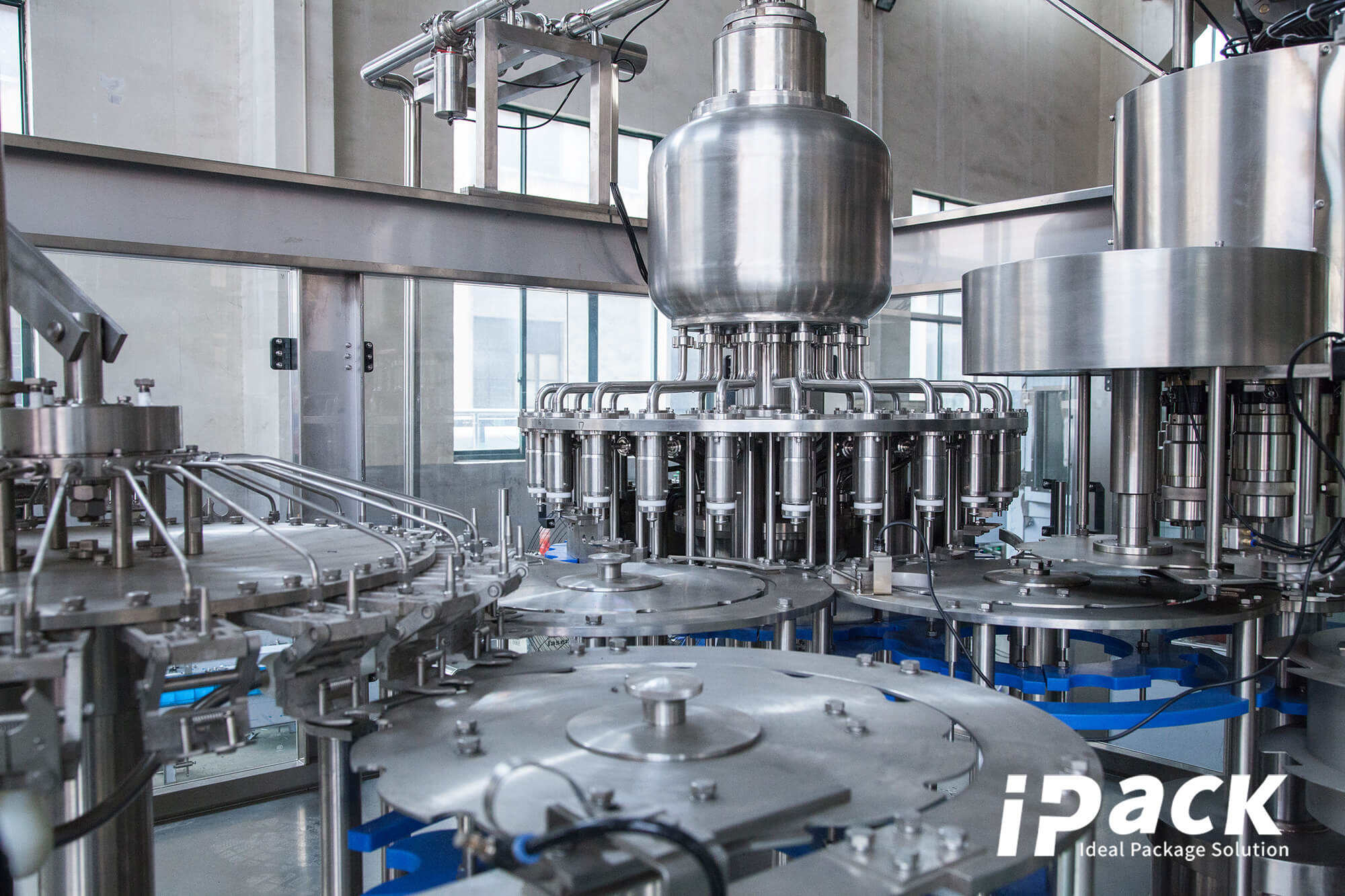
Understanding Key Types of Beverage Filling Machines
Gravity Fillers for Low-Viscosity Liquids
Gravity fillers rely on good old gravity to get those thin liquids into containers. We're talking about stuff like water, juice, maybe even some alcohols here. The machines perform really well when dealing with products that flow easily, generally anything below around 12 centipoise viscosity. Plus they keep things clean thanks to those special nozzles that don't leave drips behind. According to recent data from beverage equipment folks in 2024, these gravity fillers can hit about plus or minus 1 percent accuracy across container sizes from 250ml all the way up to 5 liters, handling roughly 100 bottles per minute. What makes them so popular? Simple design keeps costs down for smaller operations. But there's a catch they struggle quite a bit with thicker substances or anything that tends to foam up during filling.
Piston Fillers for Viscous and Pasty Products
Piston-driven systems handle thicker formulations (500-15,000 cP) like smoothies, condiments, and cosmetic creams. A reciprocating piston draws precise product volumes from hoppers, achieving ±0.5% dosing accuracy even with pulpy or particulate-laden liquids. Modern variants feature CIP (Clean-in-Place) capabilities and quick-change cylinder kits to switch between recipes in under 15 minutes.
Magnetic Pump Fillers for Accurate Dosing of Thin to Medium Liquids
These machines employ magnetically coupled pumps to transfer products (50-2,000 cP) without shaft seals, eliminating contamination risks. Operators program flow rates digitally, enabling precise fills from 10ml perfume vials to 20L industrial containers. Pharmaceutical-grade models meet FDA 21 CFR Part 11 compliance for auditable batch records.
Micro Negative Pressure and Overflow Fillers for Consistent Fill Levels
Overflow fillers submerge container necks to create uniform fill heights, ideal for translucent bottles where visual consistency matters. Micro negative pressure systems remove air pockets during filling, reducing oxidation in sensitive products like cold-press juices. Both technologies maintain ±0.3mm level variations across 98% of production runs.
Bottom-Up Filling Technology for Carbonated Beverages
Carbonated drink filling machines use pressurized bottom-up nozzles to displace air with CO₂ before sealing. This two-phase process preserves 85-90% of carbonation levels compared to open-air filling. Advanced models integrate inline carbonation sensors and automated pressure adjustments (±0.2 bar) to handle 600-1,200 cans/hour without foaming.
Matching Beverage Characteristics to Filling Machine Technology
Modern beverage plants achieve optimal performance by aligning filling technologies with specific product properties. Recent analyses show 89% of production inefficiencies stem from mismatched equipment selections (2024 Beverage Technology Report). This correlation underscores the critical relationship between a drink's physical properties and filling system requirements.
Liquid, viscous, foamy, or carbonated: How product type shapes machine choice
| Beverage Type | Key Characteristics | Ideal Filling Technology | Accuracy Range |
|---|---|---|---|
| Water/Juice | Low viscosity, non-foamy | Gravity fillers | ±0.5% |
| Smoothies/Yogurts | High viscosity | Piston fillers | ±1.2% |
| Carbonated Drinks | Pressurized, CO2 content | Pressure fillers | ±0.7% |
| Protein Shakes | Foam-prone | Overflow fillers with anti-foam | ±1.5% |
Filling technologies optimized for different liquid viscosities
Thin beverages like juices (<200 cP) perform best with gravity-fed nozzles, while viscous products such as nut butters (>5,000 cP) require positive displacement piston systems. Hybrid magnetic pump solutions now handle medium-viscosity fluids (200-2,000 cP) with ±0.8% accuracy across temperature fluctuations.
Pressurized filling solutions for carbonated beverages
Pressurized rotary fillers maintain 2-5 bar environments to preserve carbonation, preventing decarbonation through triple-stage sealing and automated pressure equalization between bottles and tanks. These systems ensure consistent CO₂ retention in high-speed operations.
Foam control strategies in beverage filling machines
Advanced filling systems reduce foam generation in beer and dairy-based drinks by 67% using angled nozzles (60° ports) and timed vacuum pulses. Real-time viscosity sensors dynamically adjust fill speeds, compensating for protein content changes in real time.
Container Type and Size: Adapting the Filling Machine to Packaging Needs
Bottles, Cans, and Cartons: Material, Shape, and Size Considerations
Beverage filling machines these days have to handle all sorts of packaging options ranging from traditional glass bottles right through to modern aluminum cans and those fancy laminated cartons we see everywhere. What kind of material gets used really shapes how these machines are built. Glass containers are heavy beasts so they require extra reinforcement during handling processes. Flexible PET bottles tell a different story though, needing special stabilizing guides along with vacuum assistance to keep them from shifting around. The size matters too when it comes to getting things just right. Even small differences matter a lot here. If there's variation beyond about plus or minus 2 millimeters in bottle neck diameter, this tends to knock down filling accuracy somewhere around 15-20 percent for standard gravity feed systems. That kind of inconsistency adds up fast on production lines.
| Material | Key Considerations | Machine Adjustments Required |
|---|---|---|
| Glass | Weight, fragility | Reinforced grips, slower line speeds |
| PET | Flexibility, lightweight | Stabilizing guides, vacuum assist |
| Aluminum Cans | Rigid structure, standardized sizes | High-speed rotary fillers |
| Cartons | Seam integrity, flat base | Pressure-controlled nozzle systems |
Leading manufacturers offer modular designs that support multiple container types without tooling changes, improving flexibility for seasonal or limited-edition runs.
Handling Irregular or Sensitive Container Designs with Precision Filling
Containers that aren't standard cylinders or have special shapes like those ergonomic water bottles people love or those collapsible pouches for travel need some pretty smart adjustments to fill them properly. The equipment has to adjust its nozzles and move up and down (what engineers call Z-axis control) so it can keep the fill level right across all these different forms. This helps cut down on wasted product somewhere around 12%, which matters when dealing with expensive materials. When working with biodegradable PLA containers that get messed up by heat, manufacturers switch to cold fill methods instead. These techniques stop the containers from warping while still keeping everything clean enough for food contact. Some of the latest advances in filling technology actually use lasers to guide where the filler goes, combined with systems that compensate for how thick or runny the material is at any given moment. As a result, most modern machines can hit almost perfect fill rates, about 99.5% accurate even when switching between completely different container shapes.
Production Volume and Automation: Scaling for Efficiency
Assessing production speed: Containers per hour and operational scale
Beverage plants optimize throughput by matching machine speed to demand. Manual systems typically handle 100-500 containers per hour (CPH), while fully automatic lines exceed 2,000 CPH. According to a 2023 Foam Control Study, facilities processing over 500,000 units monthly reduced operational costs by 38% after upgrading to full automation.
Choosing automation levels: Manual, semi-automatic, or fully automatic systems
Manufacturers select automation based on scale and SKU complexity:
- Manual filling machines ($20k-$50k) suit startups managing <5 SKUs
- Semi-automatic systems ($75k-$200k) support 24-hour production of 10-15 variants
- Fully automated lines ($300k-$1M+) integrate filling, capping, and labeling for outputs exceeding 20,000 bottles daily
Plants operating within three shifts often see a 19% faster ROI with semi-automatic systems compared to fully robotic setups, according to 2023 beverage production cost analyses.
Integrating beverage filling machines with existing production lines
Seamless integration depends on conveyor height alignment (standard 800-1,200mm), control system compatibility (PLC vs. IoT-enabled interfaces), and hygiene protocols. Facilities that matched filler neck designs to existing cappers reduced changeover time by 42% in recent trials.
Ensuring Fill Accuracy, Reliability, and Operational Efficiency
Achieving High Fill Accuracy and Repeatability Across Machine Types
Modern filling systems deliver ±0.1% to ±0.5% volumetric accuracy using servo-driven pistons and load cell monitoring (2025 Filling Technology Report). Volumetric fillers excel with syrups, while pressurized systems maintain carbonation within 0.2% variance. Overflow fillers reduce overfill waste by 17% versus gravity systems when handling low-viscosity juices.
Ease of Operation, Cleaning, and Maintenance for Minimal Downtime
Operational efficiency improves significantly with CIP compatibility and tool-free nozzle adjustments, cutting changeover times by up to 45%. Self-diagnostic sensors predict pump wear 50-80 hours in advance, reducing unplanned downtime by 32%. Stainless-steel contact surfaces lower sanitization labor by 22% compared to composites, according to a 2024 food-grade machinery survey.
Key Selection Criteria: Efficiency, Durability, and Long-Term Cost Savings
Prioritize machines with energy recovery systems that reduce compressed air usage by 30% and ISO 14405-rated components built for 10+ years of high-speed operation. ROI modeling shows a $740k savings over five years for automated fillers maintaining ±0.3% variance rates (Parker Hannifin 2023).
| Filling Technology | Typical Accuracy | Best Application |
|---|---|---|
| Piston Fillers | ±0.1% | Viscous liquids |
| Overflow Fillers | ±0.5% | Low-foam beverages |
| Rotary Fillers | ±0.3% | High-speed carbonated drinks |
For carbonated beverage producers, pressure-controlled systems maintain 98.7% fill consistency at speeds exceeding 600 cans/minute while preserving 95% of CO₂ levels.
Frequently Asked Questions
What are the main types of beverage filling machines?
The main types include gravity fillers, piston fillers, magnetic pump fillers, micro negative pressure and overflow fillers, and bottom-up filling technology for carbonated beverages.
Which machine is suitable for low-viscosity liquids?
Gravity fillers are ideal for low-viscosity liquids like water and juice.
How do piston fillers handle viscous products?
Piston fillers use a reciprocating piston to draw precise volumes, suitable for thick formulations like smoothies and condiments.
What is the best machine for carbonated beverages?
Bottom-up filling technology, with pressurized nozzles, is best for carbonated beverages.
Table of Contents
- Understanding Key Types of Beverage Filling Machines
- Matching Beverage Characteristics to Filling Machine Technology
- Container Type and Size: Adapting the Filling Machine to Packaging Needs
- Production Volume and Automation: Scaling for Efficiency
- Ensuring Fill Accuracy, Reliability, and Operational Efficiency
- Frequently Asked Questions