 EN
EN

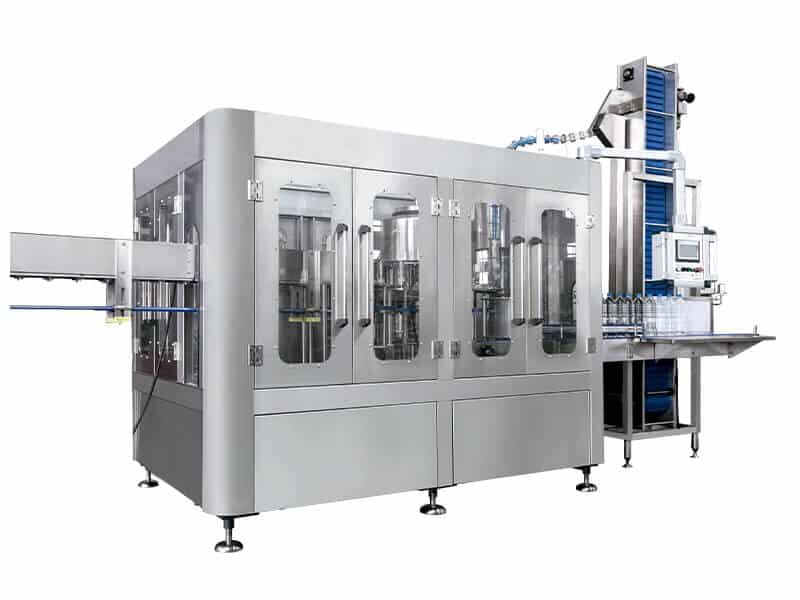
Precision Filling Technologies: Nozzles, Valves, and Fill Control Mechanisms
How Inconsistent Filling Causes Product Waste and Compliance Issues
Small differences in volume measurement can actually cost companies a fortune when it comes to water filling machines. Bottling plants end up paying around $42k each year just because they're putting too much liquid into containers according to Beverage Industry data from last year. Then there's the problem with underfilled bottles which gets them in trouble with regulations. The FDA found that nearly one out of every five plants had issues with proper fill levels back in 2022. That's where advanced control systems come in handy. These systems keep things really consistent with only about half a percent variation either way. They work well whether dealing with thin spring water that flows easily at 1 centipoise or thicker mineral water blends that sit at around 150 centipoise. Getting this kind of accuracy makes all the difference for manufacturers trying to stay compliant while keeping costs down.
Volumetric vs. Gravimetric Fill Control: Principles and Performance
| Parameter | Volumetric Control | Gravimetric Control |
|---|---|---|
| Accuracy |  ±0.5% (ideal for low-viscosity) |  ±0.2% (viscosity-independent) |
| Speed | 200–500 fills/min | 100–300 fills/min |
| Liquid Suitability | Non-foaming, Newtonian fluids | Foaming, non-Newtonian fluids |
| Maintenance | Quarterly calibration | Monthly load cell checks |
Gravimetric systems are preferred for flavored waters requiring exact mass measurements, while volumetric nozzles remain the standard in high-speed purified water bottling due to their speed and reliability.
Servo-Controlled Valve Systems: Case Study of Zhangjiagang Ipack’s 18% Overfill Reduction
Zhangjiagang Ipack Machine Co Ltd installed three stage servo valves back in 2022 that could adjust flow rates every 10 milliseconds. The company also added real time pressure feedback systems which made a big difference on their production floor. They saw overfill drop dramatically from 3.2 percent down to just 1.3 percent across all twelve production lines that package those standard 500ml PET bottles. Cutting material waste by almost 18 percent translated into roughly $2.8 million saved each year. This kind of savings has really pushed forward adoption throughout Southeast Asia where manufacturers need both accuracy and good value for money when running their operations.
High-Precision Anti-Foaming and Nozzle Design for Faster, Cleaner Fills
When filling carbonated water, venturi effect nozzles paired with laminar flow channels can dramatically cut down on foam formation, around 98% according to tests, which allows production lines to handle nearly 900 bottles per hour without any spills happening. Nozzles angled between 15 and 30 degrees work particularly well when pulling away from those tricky narrow neck bottles, preventing messes. Ceramic coatings on these components also help keep things cleaner since they stick less to biofilms than regular stainless steel does, as shown in research published last year in the Journal of Food Engineering. All these improvements mean factories spend about a quarter less time switching between different products because there's just not as much cleaning required, plus everything stays hygienic for longer periods too.
High-Speed Multi-Head Filling Systems: Scaling Output Without Sacrificing Accuracy
Meeting Rising Demand: The Push for Faster Bottled Water Production
The demand for bottled water has been going up at around 14% per year since 2020 according to the Beverage Industry Report from 2023. Because of this growth, many manufacturers are turning to multi head filling systems that can actually handle over 20,000 bottles each hour. These kinds of systems solve the problems that come with older single head models, and they still manage to keep the fill accuracy really tight, about plus or minus 1 mL. This kind of performance matches what the market needs globally, which experts predict will hit somewhere around 505 billion liters by the year 2025 as reported by Beverage Marketing Corporation.
Synchronization of Multi-Head Units for Uniform, High-Throughput Filling
The latest generation of 36 head rotary fillers incorporates servo driven actuators along with real time pressure monitoring that keeps filling cycles synchronized within just 0.02 seconds apart. Such tight coordination helps avoid overflows when dealing with changes in product viscosity or temperature fluctuations something that used to cause anywhere from 3 to 5 percent product waste in previous equipment models. These machines also feature advanced programmable logic controllers which constantly tweak the flow rate depending on the shape and size of containers passing through the line. As a result, manufacturers can expect nearly perfect fill levels across every single head with consistency rates reaching as high as 99.8 percent throughout production runs.
Case Study: 36-Head System Achieving 20,000 Bottles/Hour with <0.5% Variance
A beverage manufacturer achieved 20,000 bottles/hour with only 0.47% fill variance using a 36-head rotary filler equipped with:
- Predictive algorithms compensating for line vibration
- Laser-guided bottle positioning ( ±0.1 mm accuracy)
- Isobaric counter-pressure filling for foam-free operation
The system reached 98.5% Overall Equipment Effectiveness (OEE)–12% above industry benchmarks–demonstrating how synchronization enhances both speed and precision.
Modular Expansion and Flexible Automation for Scalable Production Lines
Top-tier systems now support hot-swappable filling heads and IoT-enabled diagnostics, allowing seamless scaling from 12 to 48 heads without mechanical reconfiguration. This modularity reduces retrofitting costs by $180k–$250k per expansion phase and enables smooth integration with downstream capping and labeling modules, future-proofing production capacity.
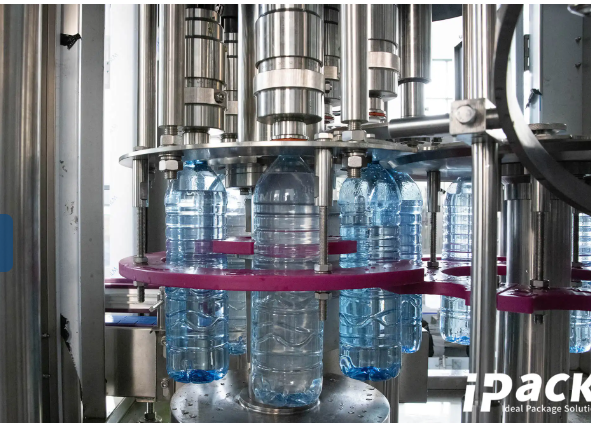
Integrated Rinse-Fill-Cap Systems: Core Components of the Water Filling Machine
Modern water filling machines depend on integrated rinse-fill-cap systems to deliver hygienic, high-speed bottling. These unified platforms minimize contamination risks and maximize efficiency–essential for meeting growing global demand.
Contamination Risks in Unrinsed Bottles and the Need for Pre-Fill Sanitization
Unrinsed bottles can harbor microbial contamination exceeding 18,000 CFU/mL, well above FDA safety thresholds. Integrated systems address this with pressurized sterile water jets that remove 99.8% of particulate matter during an inverted rinsing phase, significantly reducing the risk of product spoilage.
Working Principles of 3-in-1 Bottled Water Filling Machines
Advanced 3-in-1 machines combine three core functions:
- Rinsing: High-velocity sterile water removes debris
- Filling: Isobaric valves prevent oxygen ingress
- Capping: Automated torque sensors apply 12–18 N·m for secure, airtight seals
This integrated approach cuts cross-contamination risks by 73% compared to standalone systems (Journal of Food Engineering 2023), while streamlining line footprint and operator oversight.
Optimizing Rinse Cycles to Reduce Water Usage by 25%
Smart sensors now modulate rinse duration based on incoming bottle cleanliness, lowering average water consumption from 1.8L to 1.35L per cycle. When paired with multi-stage filtration, recycled rinse water achieves 92% reuse rates, supporting sustainability goals without compromising sanitation.
Automated Capping with Torque Sensors for Reliable Seal Integrity
Modern capping units feature real-time force monitoring that adjusts rotational speed to maintain optimal seal pressure across varying cap materials. This innovation reduces leak rates to just 0.03%, a 40% improvement over traditional pneumatic systems, ensuring product integrity throughout distribution.
PLC and IoT Integration: Smart Control Systems Driving Efficiency and Quality
Line Downtime from Stage Miscommunication and How PLCs Prevent It
Disjointed conveyor speeds, filling stages, and capping systems contribute to 23% of unplanned downtime in bottling plants (Packaging Digest 2023). Programmable Logic Controllers (PLCs) eliminate these bottlenecks by centralizing control logic, synchronizing motor RPMs, valve timings, and sensor thresholds in real time to maintain phase alignment across operations.
Automation Architecture: PLC Controls, HMI Interfaces, and Real-Time Coordination
The automation framework consists of three layers:
- PLC base layer: Executes millisecond-precision commands for actuators and servo motors
- HMI dashboards: Display key metrics such as fill accuracy ( â§Â±1 mL) and throughput (20K bottles/hour)
- IoT middleware: Connects equipment to ERP/MES systems for inventory tracking and production planning
This structure reduces human error by 58% compared to manual adjustments, according to automation adoption surveys, improving both consistency and responsiveness.
IoT-Enabled Monitoring and Predictive Maintenance in Modern Water Filling Machines
Embedded smart sensors in nozzles and cappers stream performance data to cloud platforms. Vibration analysis detects motor bearing wear up to 72 hours before failure, while pressure transmitters identify early signs of seal degradation in filler valves. Facilities using these tools report 31% fewer emergency repairs and 19% longer component lifespans.
Case Study: Sensor Feedback Reducing Jams by 40% and Predictive Algorithms Preventing Failures
After retrofitting their PET line with infrared bottle-position sensors and torque-monitored capping heads, a beverage manufacturer used machine learning to analyze 14 months of jam data, identifying root causes:
| Factor | Contribution to Jams | Solution Implemented |
|---|---|---|
| Misaligned bottles | 52% | Added servo-guided neck centering |
| Over-tightened caps | 29% | Installed dynamic torque limiters |
| Residual rinse water | 19% | Optimized air knife positioning |
This IoT-driven overhaul reduced weekly stoppages from 12 to 4.8 and achieved 99.4% OEE, demonstrating the value of data-driven optimization.
Smart Factories and Closed-Loop Recycling: Emerging Trends in Sustainable Operations
Top industrial plants are starting to combine PLC automation with artificial intelligence for better resource recovery these days. The waste water from reverse osmosis gets put back into the system for lubricating conveyors, while special heat exchangers grab around two thirds of the thermal energy normally lost during sterilization. These kinds of closed loop systems fit right into circular economy principles and save about 2.7 million liters of water each year per production line. To put that number in perspective, it's enough to fill roughly 108 Olympic sized swimming pools worth of water annually. For facility managers looking at their bottom line and environmental impact, these savings represent real value over time.
Energy and Resource Efficiency in Automated Water Filling Machine Operations
According to the latest Water Bottling Innovations Report from 2024, automated water filling machines actually use around 30% less energy compared to those old manual systems most plants still rely on. The numbers tell quite a story too traditional bottling lines tend to burn through roughly 35 kWh for every thousand bottles produced because they run those constant speed motors nonstop and have these really inefficient pump cycles going on behind the scenes. Modern equipment works differently though. These newer systems make smart use of variable frequency drives or VFDs as they're called, along with specially designed energy efficient servo motors that adjust power consumption based on what's needed at any given moment rather than running flat out all day long.
High Utility Costs in Traditional Lines vs. Gains from Advanced Automation
Semi-automatic systems use 25–30 kWh per 1,000 bottles–nearly double the energy of automated lines–primarily due to idle conveyors and unoptimized pumps. Retrofitting legacy equipment with VFDs and IoT-enabled predictive maintenance reduces energy waste by 18–22%, offering rapid payback in utility savings.
Isobaric vs. Gravity Filling: Efficiency, Speed, and Product Suitability
Isobaric filling delivers 15% faster cycle times than gravity-fed systems by maintaining consistent pressure, reducing compressor energy use. While gravity filling suits low-viscosity liquids, isobaric technology minimizes aeration and stabilizes energy demand during high-speed runs–key for achieving <0.5% fill variance.
Strategies for Reducing Energy Use and Water Waste Through System Optimization
Three proven strategies drive modern efficiency:
- Closed-loop water recycling: Reuses 92% of rinse water, cutting freshwater demand by 1.2 million liters annually per line
- VFD-optimized conveyors: Synchronize motor speeds with filling heads, reducing energy use by 35%
- AI-driven PLCs: Coordinate heating, filling, and cooling stages to minimize thermal losses, saving 8–12% in total energy
Together, these innovations help bottlers reduce utility costs by $18,000–$26,000 per line each year while meeting stringent environmental standards.
FAQ Section
What are the main differences between volumetric and gravimetric fill control?
Volumetric fill control is ideal for low-viscosity, non-foaming fluids, offering speed but ±0.5% accuracy. Gravimetric control suits varied viscosities, providing accuracy at ±0.2% but at slower speeds.
How do servo-controlled valve systems improve filling accuracy?
These systems adjust flow rates rapidly and use real-time feedback, reducing overfill and material waste, thereby saving costs substantially.
Why are integrated rinse-fill-cap systems important?
They streamline production, minimize contamination, and optimize efficiency, crucial for maintaining hygienic standards and meeting market demands.
What role do PLCs and IoT play in bottling efficiency?
They synchronize operations, reduce errors, and enable predictive maintenance, ultimately decreasing downtime and enhancing productivity.
Table of Contents
- Precision Filling Technologies: Nozzles, Valves, and Fill Control Mechanisms
- High-Speed Multi-Head Filling Systems: Scaling Output Without Sacrificing Accuracy
- Integrated Rinse-Fill-Cap Systems: Core Components of the Water Filling Machine
-
PLC and IoT Integration: Smart Control Systems Driving Efficiency and Quality
- Line Downtime from Stage Miscommunication and How PLCs Prevent It
- Automation Architecture: PLC Controls, HMI Interfaces, and Real-Time Coordination
- IoT-Enabled Monitoring and Predictive Maintenance in Modern Water Filling Machines
- Case Study: Sensor Feedback Reducing Jams by 40% and Predictive Algorithms Preventing Failures
- Smart Factories and Closed-Loop Recycling: Emerging Trends in Sustainable Operations
- Energy and Resource Efficiency in Automated Water Filling Machine Operations
- FAQ Section