 EN
EN

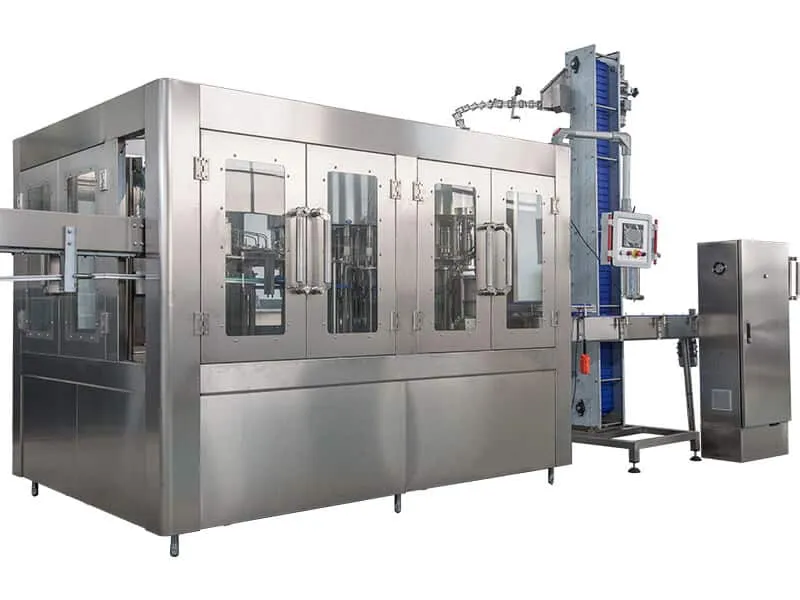
The Engineering Foundations of High-Accuracy Water Filling Machines
Mechanical Design Principles Ensuring Micron-Level Fill Consistency
The heart of today's water filling machines lies in their precision engineered parts. Stainless steel frames that won't bend or warp help reduce machine vibrations during operation. The conveyor belts are driven by servos that can place bottles with incredible accuracy - typically around plus or minus 0.1 millimeter. Flow control valves manage how liquids move through the system with about 0.25 percent accuracy, which matters a lot when dealing with expensive products. Anti drip nozzles stop leaks after filling, saving companies money they would otherwise lose as wasted product. Even small errors add up fast. One percent overfill alone costs manufacturers roughly forty thousand dollars each year on a single production line. That's why top quality manufacturers test their equipment in certified metrology labs following ISO 9001 standards. These tests confirm that the machines work consistently for tens of millions of cycles without losing their accuracy over time.
Gravity vs. Piston vs. Peristaltic: Matching Fill Technology to Water-Grade Applications
Selecting optimal filling technology depends on water purity requirements and production scale:
- Gravity fillers suit standard mineral water, using atmospheric pressure for gentle filling at 200–400 bottles/hour. Their simplicity minimizes particle generation.
- Piston fillers handle high-viscosity enhanced waters (e.g., electrolytes or vitamins) at 600+ bottles/hour, with ceramic cylinders delivering 99.8% volumetric accuracy.
- Peristaltic pumps dominate pharmaceutical-grade water filling, where tubing isolation prevents cross-contamination and maintains sterile pathways with ±0.5ml precision.
Volumetric systems with load cell verification now enable 0.1% variance across all technologies, adapting fill parameters for container expansion during carbonation. PLCs automatically recalibrate dosing when switching between still and sparkling formats.
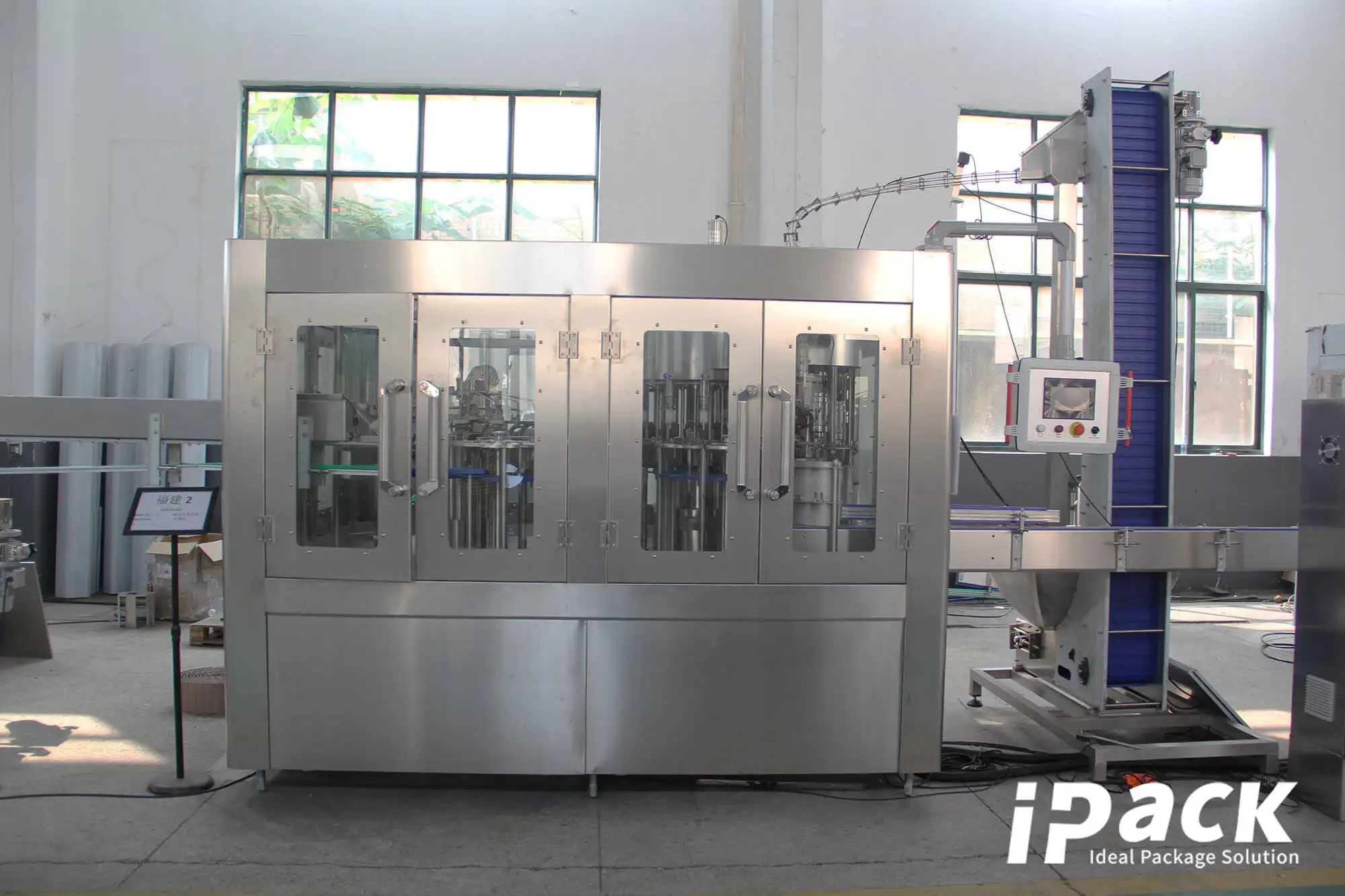
Smart Sensing and Closed-Loop Control in Water Filling Machines
Load Cells, Ultrasonic Sensors, and Real-Time Feedback for Sub-Milliliter Accuracyc
Today's water filling equipment can hit sub-milliliter accuracy thanks to load cells working alongside ultrasonic sensors that provide constant feedback during operation. These load cells stop the filling process right when it reaches the desired weight, so there's no risk of either overfilling or leaving containers short on product something that matters a lot for keeping production costs down. The ultrasonic sensors monitor how much liquid is going in with incredible detail, adjusting automatically whenever the product gets thicker or thinner or when temperatures change slightly. Behind the scenes, closed loop control systems crunch all this information and make around 200 tiny corrections every single second just to maintain that pinpoint accuracy. According to findings from the 2023 Beverage Production Audit, these advanced systems slash product giveaway by nearly 90% compared to old school manual filling techniques. They also fix those annoying inconsistencies where bottles end up filled to different levels, cutting this problem by more than 95% even at maximum speed operations. Less waste means better margins for manufacturers while customers get consistent product quality that builds trust in the brand over time.
PLC and HMI Integration for Adaptive Dosing and Batch Traceability
Programmable Logic Controllers (PLCs) along with Human Machine Interfaces (HMIs) make it possible to adjust dosing on the fly while keeping track of every batch from start to finish. These PLC systems handle valve timing and volume changes with pretty impressive speed, about 0.1 seconds actually, and they work hand in hand with sensors to make instant corrections when needed. The big plus here is getting rid of those pesky manual calibration mistakes. Most facilities see around ±1% consistency in their volumes, which covers about 98 out of 100 batches. For operators, HMIs provide easy to read dashboards showing everything from flow rates to where containers are positioned during processing. Adjustments can be made quickly through touchscreens rather than hunting through menus. There's also built-in statistical process control that gathers all the necessary compliance information for audits throughout manufacturing. Plants that have adopted this setup typically hit around 98.6% overall equipment effectiveness according to recent industry benchmarks, though results do vary depending on maintenance practices and operator training levels.
AI and Automation Advancing Water Filling Machine Capabilities
AI and automated systems are changing how water filling machines work, thanks to things like predictive analysis and self-adjusting controls. The machine learning stuff looks at past operation records to figure out when maintenance might be needed before problems happen, which can cut down unexpected stoppages by around 30 percent. Modern equipment keeps an eye on factors such as liquid thickness and heat levels, making instant changes to how much gets filled so everything stays super accurate even with different types of containers. When connected to the internet of things, these machines let operators check performance from anywhere. Sensors gather info about how fast liquids move and how much power is being used. Getting smarter about these numbers helps save about 15% in yearly energy costs, based on what various manufacturing reports have found.
- Predictive maintenance, identifying component wear before failure
- Self-calibrating dosing systems, compensating for environmental fluctuations
- Automated quality control, using vision systems to detect fill-level deviations
- Production analytics dashboards, tracking OEE (Overall Equipment Effectiveness) metrics
When AI meets robotic handling in manufacturing, it creates something pretty amazing for production lines. Water filling machines can now automatically change their speed when they spot problems further down the line. The combination really boosts how much gets produced each day, all while keeping fill levels super consistent within half a percent difference. And this works even when machines are cranking out over 300 bottles every single minute. According to industry studies from last year, factories that have adopted these smart systems typically see around 22% better performance than older plants still using traditional methods. Some manufacturers report noticeable improvements in both quality control and maintenance costs after making the switch.
FAQ
-
What are the main types of water-fill technologies?
Gravity fillers, piston fillers, and peristaltic pumps are the main types, each tailored for different water-grade applications. -
How do load cells contribute to accuracy?
Load cells stop the filling process at the exact weight, preventing overfilling or underfilling for consistent product output. -
How can automation benefit production?
Automation boosts throughput, maintains precise fill levels, and enhances energy efficiency and quality control. -
What role does AI play in water filling machines?
AI systems predict maintenance needs, adjust to environmental changes, and enhance quality control for improved performance.