 EN
EN

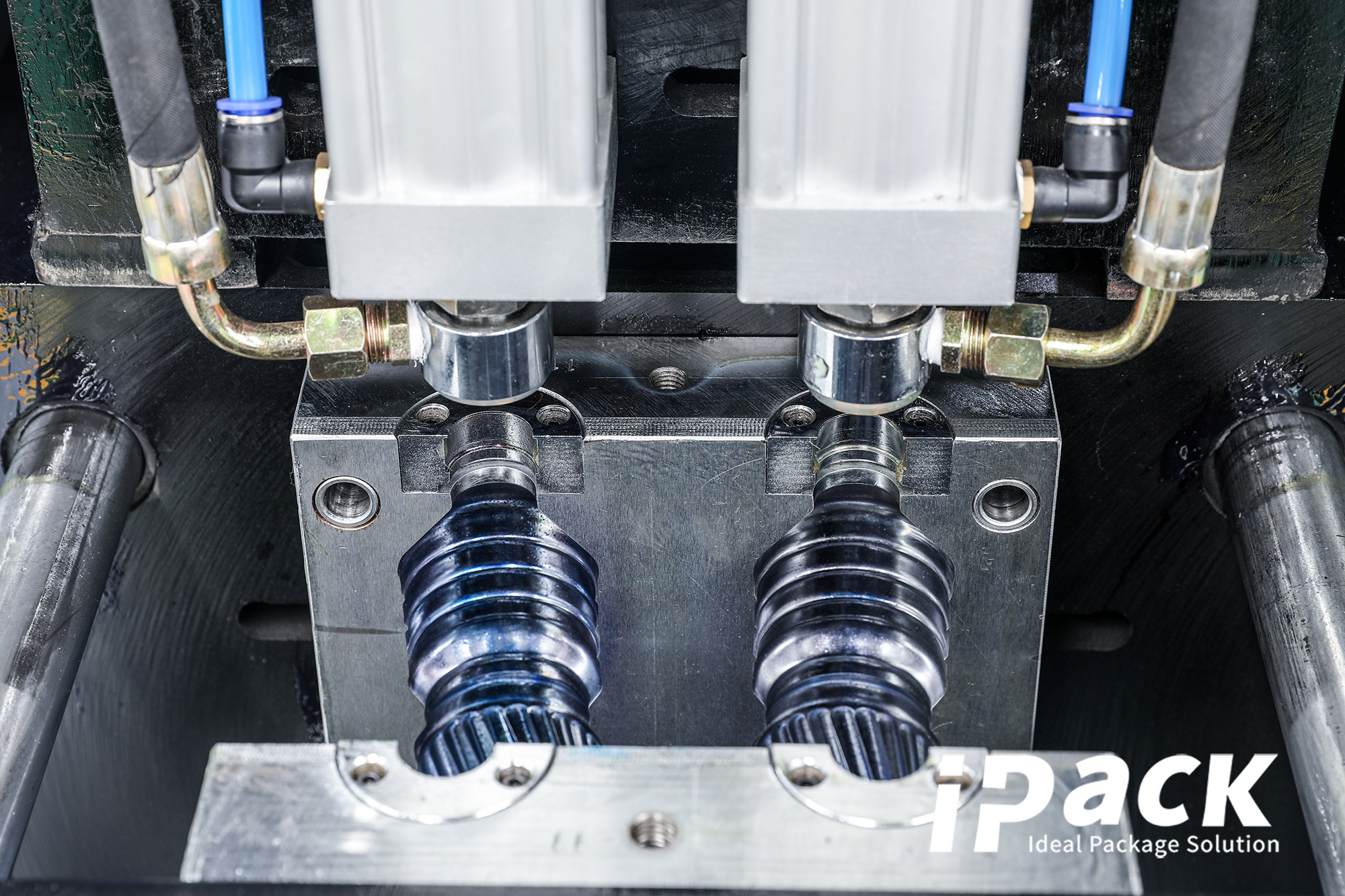
The 3‑AM Downtime – When a Bearing Failure Could Have Been Predicted
A water bottling plant in the Pacific Northwest lost six hours of production when a 24‑cavity PET blow molder's stretch rod bearing seized at 3 AM. The maintenance team discovered the failure only after the machine's vibration had damaged adjacent mold halves. Total cost: $8,400 in lost production, $3,200 in emergency parts, and a missed delivery window. The data showed bearing temperature had risen 1.2°C above baseline for three consecutive shifts before failure—a clear signal that went unmonitored. A simple predictive maintenance system would have flagged the anomaly 72 hours earlier, enabling a scheduled 45‑minute bearing replacement during a planned downtime window.
This scenario is more common than most plant engineers admit. Over the past four years, beverage packaging consultants have observed that AI‑powered predictive maintenance consistently prevents costly downtime in PET blow molding operations. Understanding the shift to smart blow molding isn't just about machine upgrades; it is about turning operational data into actionable intelligence that protects production uptime and profitability.
AI Predictive Maintenance – How Machine Learning Prevents Unplanned Downtime
Machine learning models trained on years of operational data continuously monitor vibration signatures, thermal fluctuations, and hydraulic or pneumatic pressure curves across every axis of a PET bottle blowing machine. Subtle deviations—a minor bearing frequency shift or a 0.5°C rise in a preform heating zone—trigger immediate anomaly alerts, often days before failure.
| Detection Parameter | Typical Anomaly | Lead Time Before Failure |
|---|---|---|
| Vibration frequency | Bearing wear | 2‑7 days |
| Temperature rise | Heater degradation | 1‑3 days |
| Pressure drop | Valve leakage | 2‑5 days |
| Motor current | Mechanical resistance | 3‑10 days |
As documented in a 2022 McKinsey analysis, this predictive approach reduces unplanned downtime by up to 42%, directly boosting overall equipment effectiveness. Unlike time‑based maintenance, condition‑based scheduling ensures service occurs only when evidence warrants it—cutting labor hours and spare‑part inventories. With each new data point, the algorithm refines its accuracy, adapting to natural wear rates and shifts in production cadence. Proactive intervention avoids cascading damage to adjacent modules, extending asset life and transforming bottling lines into resilient, data‑driven operations.
Cloud‑Connected IoT Sensor Networks – Real‑Time Parameter Adaptation
A mesh of Industrial Internet of Things sensors—embedded in preform feeders, infrared ovens, stretch rods, and mold halves—transmits microsecond‑resolution data to a cloud analytics platform. There, a digital twin of the entire blow‑molding sequence continuously compares live conditions against ideal parameter libraries for each bottle design and rPET blend.
| Adaptation Trigger | System Response | Quality Impact |
|---|---|---|
| Ambient humidity change | Adjust blow pressure ramp rate | Maintains wall thickness |
| Preform crystallinity shift | Modify heating zone intensity | Prevents haze |
| PET viscosity variation | Update stretch ratio | Ensures burst strength |
| Mold temperature drift | Adjust cooling dwell time | Preserves dimensional accuracy |
When variances emerge—from ambient humidity changes or slight preform crystallinity shifts—the AI engine instantly adjusts stretch ratios, blow pressure ramp rates, and cooling dwell times without human intervention. A 2023 industry case study found that such closed‑loop adaptation reduced wall‑thickness drift by 18% and cut defect‑driven scrap by 15%. The cloud layer also aggregates insights across multiple production sites, enabling fleet‑wide learning and remote tuning.
All‑Electric Servo Drive – 27‑35% Energy Savings vs. Hydraulic Systems
All‑electric PET bottle blowing machines eliminate the constant oil pumping, cooling, and pressure‑loss inefficiencies inherent in hydraulic drives. Replacing high‑friction pumps with direct‑drive servo motors enables over 90% of input electricity to be converted into productive motion—compared with roughly 60% efficiency in typical hydraulic configurations.
| Performance Metric | Hydraulic System | All‑Electric Servo | Improvement |
|---|---|---|---|
| Energy efficiency | ~60% | >90% | +30% |
| Energy consumption (per 1,000 bottles) | 8‑10 kWh | 5.5‑7 kWh | 27‑35% lower |
| Hydraulic oil required | 200‑400 L | None | Eliminated |
| Cooling water demand | High | Minimal | Reduced |
| Maintenance interval | 2,000‑4,000 hrs | 6,000‑8,000 hrs | 2x longer |
Independent audits conducted under the EU Ecodesign Regulation for plastics machinery confirm that modern servo‑driven units reduce total energy consumption by 27‑35% when producing standard 500‑1,500 ml bottles. These savings stem from three key mechanisms: energy‑on‑demand operation (motors activate only during active clamping and stretching), elimination of hydraulic fluid cooling, and high‑efficiency heating zones that precisely match the preform's thermal profile. Field data from a 12‑shift test at a leading bottling plant showed a steady 31% lower electrical load for a 10‑cavity machine running at 24,000 bottles per hour.
Dynamic Thermal Profiling – Smart Heating/Cooling Cycles Reduce Cycle Time by 9%
Dynamic thermal profiling uses infrared pyrometer arrays and AI‑driven algorithms to adjust heating intensity in each oven zone in real time. Instead of applying a fixed temperature curve to every preform, the system samples surface temperatures at 50‑ms intervals and modulates power to infrared lamps segment‑by‑segment.
| Cycle Component | Fixed Thermal Profile | Dynamic Thermal Profile | Improvement |
|---|---|---|---|
| Heating phase | 2.8 sec | 2.4 sec | -0.4 sec |
| Cooling phase | 2.2 sec | 1.8 sec | -0.4 sec |
| Stretch/blow phase | 1.4 sec | 1.3 sec | -0.1 sec |
| Total cycle time | 5.5 sec | 5.0 sec | -9% |
This fine‑tuned control eliminates the over‑heating guard bands required by static profiles—directly shortening the post‑blow cooling phase. Production benchmarks from a high‑throughput beverage line show intelligent thermal management trims 0.4‑0.5 seconds from a typical 5.5‑second cycle, yielding a 9% reduction while maintaining consistent sidewall distribution and burst‑pressure margins. The closed‑loop logic also compensates for ambient fluctuations, material‑batch viscosity shifts, and voltage variations—factors that can cause up to 2% bottle weight drift without active correction.
rPET Compatibility – Stable Processing of ≥30% Post‑Consumer Recycled PET
Modern PET bottle blowing machines reliably process post‑consumer rPET at levels of 30% and higher—without sacrificing clarity, burst strength, or output consistency. This stability hinges on dynamic infrared heating arrays that profile each preform individually, compensating for rPET's narrower processing window and inconsistent melt behavior to prevent haziness and preserve glossy transparency.
| Performance Parameter | 100% Virgin PET | 30% rPET Blend | 50% rPET Blend |
|---|---|---|---|
| Clarity (haze %) | <1% | <1.5% | <2% |
| Burst pressure (bar) | 12.5 | 12.2 | 11.8 |
| Cycle time (sec) | 5.0 | 5.2 | 5.5 |
| Top load (N) | 320 | 315 | 305 |
Simultaneously, closed‑loop servo stretch‑blow systems calculate optimal stretch ratios in real time, ensuring uniform wall thickness despite fluctuations in feedstock intrinsic viscosity. In‑cavity pressure sensors feed live data back to the controller, automatically adjusting blowing profiles to maintain consistent container volumes and mechanical integrity. With the global rPET market projected to exceed $15.1 billion (MarketsandMarkets, 2023), adopting rPET‑compatible machinery allows manufacturers to significantly reduce virgin plastic consumption, lower raw material costs, and shrink carbon footprints.
Lightweighting – AI‑Guided Wall‑Thickness Mapping for 12‑18% Material Reduction
Modern PET bottle blowing machines integrate AI‑driven precision stretch blow molding to advance lightweighting. Inline infrared sensors capture real‑time preform temperature profiles and material distribution, feeding data to machine learning algorithms that compute adaptive stretch ratios for each container. During blowing, the system dynamically adjusts axial and radial elongation—mapping wall thickness to place polymer only where structural loads require it, eliminating excess material in low‑stress zones.
| Bottle Design | Standard Weight | Lightweighted Weight | Material Reduction |
|---|---|---|---|
| 500 ml (standard) | 18.5 g | 15.8 g | 14.6% |
| 1,000 ml | 26.0 g | 22.5 g | 13.5% |
| 1,500 ml | 32.0 g | 27.0 g | 15.6% |
A 2024 industry benchmarking study confirmed these AI‑guided optimizations deliver a 12‑18% reduction in resin consumption compared to prior lightweight designs, while fully meeting burst‑pressure requirements under food‑grade packaging standards. The process preserves essential attributes like clarity and top‑load strength—even when processing up to 30% recycled rPET. Coupled with servo‑driven preform handling and intelligent oven heating, this approach enables manufacturers to consistently meet sustainability targets without compromising performance, safety, or production speed.
System Integration – The BXKM Perspective
Achieving the full benefits of modern PET blow molding technology—AI predictive maintenance, energy efficiency, and rPET compatibility—requires more than selecting a high‑performance blow molder. It demands a systematic approach to the entire production ecosystem, including the auxiliary equipment that supports blow molding operations. BXKM's engineering expertise in auxiliary equipment for plastics processing—including drying, conveying, blending, and pelletizing—supports the reliability of blow molding lines through thoughtful integration of material handling and recycling systems. By understanding the interdependencies between blow molding equipment and the material preparation systems that supply it, BXKM helps bottle producers achieve consistent output and reduce unplanned downtime. This comprehensive support ensures that both primary forming equipment and auxiliary systems remain productive and reliable.
FAQ
| Question | Answer |
|---|---|
| What is predictive maintenance in PET blow molding? | Machine learning models monitor vibration, temperature, and pressure to detect anomalies days before failure—reducing unplanned downtime by up to 42%. |
| How do all‑electric blow molders save energy? | Direct‑drive servo motors achieve >90% efficiency vs. ~60% for hydraulic systems, cutting energy use by 27‑35% and meeting EU Ecodesign 2024 standards. |
| Can PET blow molders process recycled material? | Yes. Modern machines reliably process ≥30% rPET—maintaining clarity, burst strength, and cycle times comparable to virgin PET. |
| What are the benefits of lightweighting? | AI‑guided wall‑thickness mapping reduces PET resin use by 12‑18% while maintaining burst‑pressure compliance, cutting material costs and transport emissions. |
| How does real‑time parameter adaptation improve quality? | IoT sensors and digital twins adjust stretch ratios and heating profiles instantly—reducing wall‑thickness drift by 18% and defect scrap by 15%. |
| How does BXKM support PET blow molding operations? | BXKM provides auxiliary equipment for plastics processing—drying, conveying, blending, and pelletizing—ensuring consistent material supply for blow molding lines. |