 EN
EN

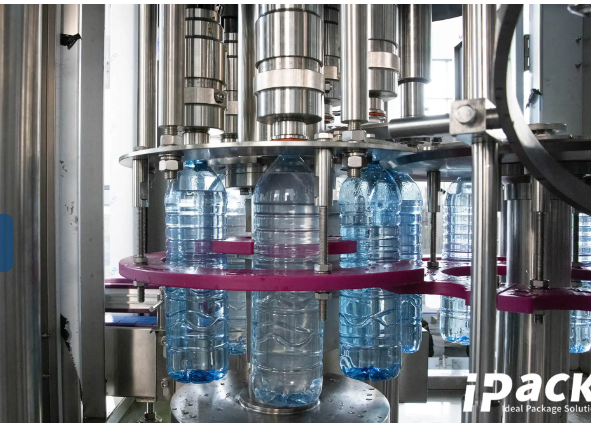
Foaming in carbonated drink filling machines is one of the most persistent and costly challenges in beverage production, leading to product waste, inconsistent fill levels, and compromised carbonation. [Contact our filling technology experts] for tailored solutions to optimize your carbonated drink filling machine performance and reduce foam-related losses. This guide explores the root causes of foaming and provides proven, actionable solutions based on industry research and real-world production data.
Root Causes – CO₂ Pressure Instability and Temperature-Driven Nucleation
Foam generation in carbonated drink filling machines stems primarily from the abrupt release of dissolved CO₂ when system pressure drops below the saturation point. Even a transient differential exceeding 0.5 bar can trigger violent bubble nucleation, as documented by Ponemon (2023), turning a controlled stream into a foamy surge. Instability often originates in the transfer line between the product tank and filler bowl, where pressure fluctuations disrupt equilibrium. Liquid turbulence, sharp bends, and poorly designed valve seats amplify this effect by creating localized low-pressure zones that act as nucleation sites. Temperature compounds the issue: CO₂ solubility is inversely proportional to beverage temperature, so a rise of just 2°C can significantly reduce gas-holding capacity and promote bubble formation during filling. When incoming product temperature fluctuates beyond ±2°C from the set point, fill consistency deteriorates and foam overflows become frequent. Without dynamic backpressure regulation and tight thermal control, even high-speed carbonated drink filling machines struggle to maintain foam-free operation.
Proven Fixes – Pre-Foam Degasification, Optimized Nozzle Geometry, and Flow-Rate Synchronization
Effective foam reduction starts upstream—by removing excess dissolved CO₂ before the liquid reaches the filling valve. Pre-foam degasification, typically achieved via vacuum chambers or controlled pre-evacuation, lowers CO₂ levels to a stable, less nucleation-prone state. Next, nozzle geometry must support laminar flow: smooth, tapered orifices with polished surfaces eliminate sharp edges that induce turbulence and low-pressure wakes. Many modern high-speed carbonated drink filling machines use nozzles engineered with computational fluid dynamics to deliver a cohesive, low-velocity stream that gently wets the container wall rather than splashing. Complementing these hardware improvements, flow-rate synchronization adjusts fill speed in real time to match the container's ability to vent displaced gas. Servo-driven valves and variable-frequency drives on the product pump enable precise ramp-up at fill start, steady mid-fill velocity, and controlled deceleration before cut-off. When combined with counter-pressure (isobaric) filling, this integrated approach reduces foam volume by more than 50%, improving line efficiency, minimizing product waste, and preserving carbonation integrity.
Achieving Consistent Fill Levels and Carbonation Integrity
Henry's Law dictates that dissolved CO₂ concentration is directly proportional to its partial pressure above the liquid at constant temperature. In practice, solubility is maximized at low temperatures (2–8°C) and elevated pressures (2–5 bar). If backpressure in the filling chamber falls below the equilibrium threshold required to retain CO₂ in solution, gas nucleates and escapes—causing foaming, inconsistent fill levels, and carbonation loss. While isobaric systems maintain constant headspace pressure throughout the fill cycle, minor pressure dips and product temperature fluctuations can still disturb solubility. Dynamic backpressure control—using real-time sensor feedback to continuously adjust pressure profiles—preserves this delicate balance. This ensures CO₂ remains fully dissolved until sealing, delivering uniform carbonation and preventing costly volume give-away. Precision calibration of sensors and actuators is essential to prevent under-carbonation and fill-level drift. Capacitive or ultrasonic fill-level probes should be verified against a master gauge at least once per shift; a ±1 mm deviation can result in several milliliters of product loss per container. Pressure transducers and flow meters require calibration using NIST-traceable standards to ensure backpressure setpoints and liquid flow rates remain within specification for your carbonated drink filling machine.
Minimizing Oxygen Pickup and Contamination During High-Speed Filling
Minimizing oxygen pickup during high-speed carbonated drink filling demands careful reconciliation of sanitary design and fluid dynamics. Clean-in-Place systems require smooth, crevice-free surfaces to prevent microbial harborage—but such features can inadvertently introduce turbulence that increases oxygen entrainment. Since the filling process accounts for only 10–20% of total oxygen content in a sealed container, optimizing this stage is critical. Leading manufacturers address this by engineering filling nozzles with hygienic, fully drainable geometries that sustain gentle, bottom-up laminar flow without compromising cleanability. Pre-evacuation cycles and targeted CO₂ purging further suppress oxygen ingress while maintaining sanitary compliance. For instance, double or triple pre-evacuation paired with close-coupled capping can limit oxygen ingress to under 30 ppb in modern carbonated drink filling machine systems. The optimal solution lies in selecting machines that integrate hygienic flow paths with automated CIP—ensuring both laminar flow integrity and robust aseptic performance.
Ensuring Post-Fill Seal Integrity and Carbonation Retention
The final milliseconds of the filling cycle are decisive for product quality. Any delay between fill completion and sealing opens a window for CO₂ escape and oxygen ingress. Top-performing carbonated drink filling machines prioritize "fill-and-seal" contemporaneity—executing closure in under 100 ms. Data shows this keeps CO₂ loss below 1%, preserving intended fizz. Delays extending to 700 ms or more can cause losses exceeding 8%, rendering products unsuitable for premium markets. Capping precision is equally vital. Advanced lines use servo-driven systems to apply consistent torque—typically 8–12 Nm—achieving a 99.7% seal integrity rate, preventing microscopic channel leaks that can shorten shelf life by up to 80%.
| Sealing Delay (ms) | CO₂ Loss (%) | Operational Impact |
|---|---|---|
| < 100 ms | < 1% | Ideal for premium product lines |
| 300–500 ms | 3%–5% | Acceptable for medium-speed operations |
| > 700 ms | > 8% | Significant loss; unsuitable for high-end products |
Closure liner selection also plays a key role. Flexible, non-PVC polymers like EVA or TPE conform reliably to container imperfections without deforming under pressure. A 2021 study of 12,000 containers found heat-sealed aluminum lids retained 98.7% of initial CO₂ after six months—outperforming standard screw caps by 19%. Together, instant fill-to-seal synchronization, controlled torque application, and high-performance liners form a complete strategy for long-term carbonation retention and taste stability. By implementing these proven solutions, beverage producers can significantly reduce foaming, improve fill accuracy, and extend shelf life in their carbonated drink filling machine operations.
Frequently Asked Questions
How does temperature influence CO₂ solubility in beverages? Temperature inversely affects CO₂ solubility; colder beverages hold more dissolved CO₂, while warmer products promote bubble nucleation and foaming during filling. A rise of just 2°C can significantly reduce gas-holding capacity.
What is dynamic backpressure control in filling machines? Dynamic backpressure control uses sensor feedback to adjust pressure profiles in real-time, ensuring dissolved CO₂ remains in solution and foaming is minimized. This is essential for consistent carbonation in carbonated drink filling machines.
Why is fill-to-seal synchronization critical? High-speed fill-to-seal synchronization prevents CO₂ escape and oxygen ingress, ensuring product carbonation retention and quality consistency. Delays beyond 100 ms can result in measurable CO₂ loss.
What are the best materials for closure liners? Non-PVC polymers like EVA and TPE provide flexibility and reliable sealing, reducing CO₂ loss and maintaining shelf life. Heat-sealed aluminum lids have been shown to retain 98.7% of initial CO₂ after six months.
How can I reduce foaming in my carbonated drink filling machine? Foaming can be reduced through pre-foam degasification, optimized nozzle geometry with laminar flow design, and flow-rate synchronization. When combined with dynamic backpressure control, foam volume can be reduced by over 50%.
What is the ideal sealing delay for premium carbonated beverages? For premium product lines, sealing delay should be under 100 ms, which keeps CO₂ loss below 1%. Delays exceeding 700 ms can cause losses over 8%, making products unsuitable for premium markets.